Table of Contents
- Understanding HR Analytics: From Data to Strategic Insights
- Essential HR Analytics Metrics Every Organization Should Track
- Building Your HR Analytics Infrastructure
- Creating Effective HR Analytics Dashboards
- Predictive Analytics: Forecasting Workforce Trends
- Developing HR Analytics Capabilities in Your Team
- Turning HR Analytics Into Action
- Privacy, Ethics, and Governance in People Analytics
- The Future of HR Analytics: Emerging Trends and Technologies
- Getting Started: Your HR Analytics Roadmap
- Frequently Asked Questions
In today’s data-driven business landscape, HR analytics has emerged as a critical capability that separates high-performing organizations from those struggling to compete for talent and optimize workforce performance. By systematically collecting, analyzing, and acting on people data, forward-thinking HR teams are transforming from administrative support functions into strategic business partners who directly influence organizational success. This comprehensive guide will equip you with the frameworks, metrics, and methodologies needed to harness the power of workforce data and drive measurable business results.
Understanding HR Analytics: From Data to Strategic Insights
HR analytics, also known as people analytics or workforce analytics, is the systematic process of gathering and analyzing employee data to improve business decisions and organizational outcomes. Unlike traditional HR reporting that simply documents what happened, HR analytics seeks to understand why it happened, predict what will happen next, and prescribe actions to achieve desired results.
The evolution of HR analytics follows a maturity model with four distinct levels. Descriptive analytics answers “what happened” through basic metrics and historical reports. Diagnostic analytics explores “why it happened” by identifying patterns and correlations in workforce data. Predictive analytics forecasts “what will happen” using statistical models and machine learning algorithms. Finally, prescriptive analytics recommends “what should we do” by simulating different scenarios and their likely outcomes.
Organizations at higher maturity levels consistently outperform their peers. Research shows that companies with advanced people analytics capabilities are 2.3 times more likely to outperform financially and 2.1 times more likely to be talent management leaders in their industries.
Essential HR Analytics Metrics Every Organization Should Track
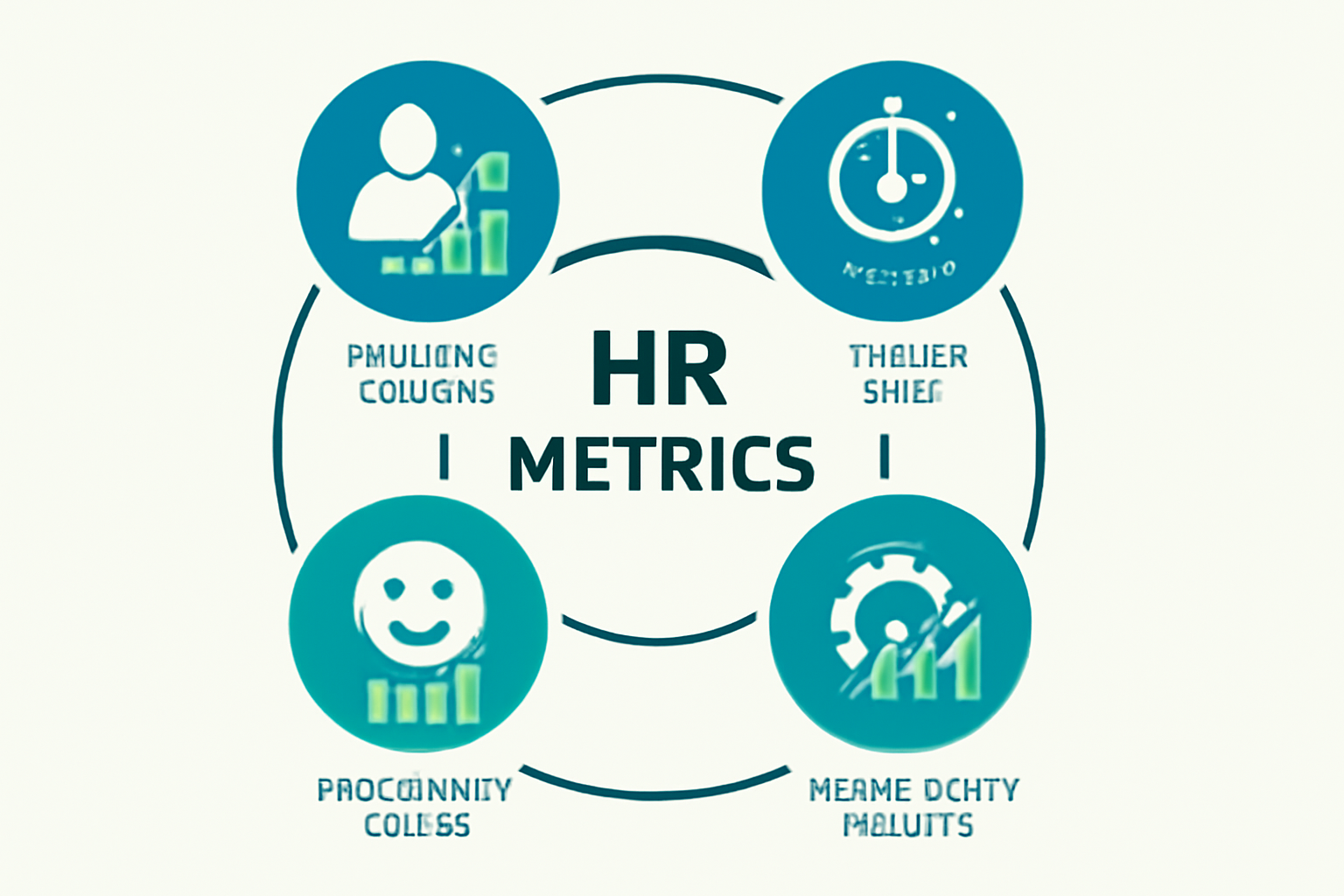
Building an effective analytics practice starts with identifying the right metrics to measure. The most impactful HR metrics connect workforce activities directly to business outcomes, providing actionable insights rather than vanity numbers.
Recruitment and Hiring Metrics
Time to hire measures the days between when a candidate enters your pipeline and when they accept an offer, revealing recruitment process efficiency. Cost per hire calculates the total investment required to fill each position, including advertising, recruiter time, technology costs, and agency fees. Quality of hire assesses new employee performance, cultural fit, and retention rates to evaluate sourcing effectiveness. These metrics help optimize your talent acquisition strategy and demonstrate recruiting ROI.
Retention and Turnover Analytics
Employee turnover rate tracks the percentage of employees who leave within a given period, segmented by voluntary versus involuntary departures. Retention rate measures the inverse—how many employees stay over time. More sophisticated organizations calculate turnover costs, including separation expenses, vacancy costs, recruitment and onboarding investments, and productivity losses during the learning curve. High-performing companies also analyze turnover by performance level, identifying whether they’re losing top talent or managing out low performers.
Productivity and Performance Indicators
Revenue per employee divides total revenue by headcount, providing a high-level productivity benchmark across time periods and against industry standards. Time to productivity measures how quickly new hires reach full performance capacity, directly impacting your return on hiring investments. Employee productivity scores combine output metrics, goal achievement, and performance ratings to create comprehensive productivity profiles across teams and departments.
Engagement and Satisfaction Metrics
Employee engagement scores derived from surveys measure emotional commitment, discretionary effort, and connection to organizational mission. Absenteeism rate tracks unplanned absences as a percentage of total available work days, often serving as an early warning indicator of disengagement or burnout. Employee Net Promoter Score (eNPS) gauges whether employees would recommend your organization as a place to work, correlating strongly with retention and performance.
Building Your HR Analytics Infrastructure
Successful HR analytics requires more than just tracking metrics—it demands a systematic approach to data collection, storage, analysis, and action. The foundation begins with data infrastructure that consolidates information from multiple sources into a single source of truth.
Most organizations store people data across disparate systems: applicant tracking systems for recruitment, HRIS platforms for employee records, performance management software for reviews, learning management systems for training, and survey tools for engagement feedback. The first step in building analytics capability is integrating these data sources, either through native integrations, middleware platforms, or data warehouses that centralize information for analysis.
Data quality is paramount. Incomplete, inconsistent, or inaccurate data leads to flawed insights and poor decisions. Establish data governance protocols that define data ownership, standardize definitions across the organization, implement validation rules to catch errors at entry, and conduct regular audits to maintain data integrity. For example, ensure that “department” is coded consistently across all systems and that termination dates are recorded uniformly.
Creating Effective HR Analytics Dashboards
Dashboards transform raw data into visual insights that drive decision-making. An effective HR analytics dashboard balances comprehensiveness with clarity, presenting the right information to the right audience at the right time.
Executive dashboards should focus on high-level metrics tied to business strategy: total headcount and costs, turnover rates for critical roles, diversity representation at leadership levels, and workforce productivity indicators. These dashboards answer strategic questions about whether the organization has the right people in the right places to execute business plans.
Operational dashboards for HR teams drill deeper into specific functional areas. A recruiting dashboard might track open requisitions, time to fill by role and department, candidate pipeline conversion rates, and source effectiveness. A retention dashboard could display turnover trends, flight risk scores for key employees, exit interview themes, and retention program effectiveness.
Manager dashboards provide team-specific insights: team composition and skills inventory, individual performance metrics, engagement scores with team comparisons, and upcoming talent events like performance reviews or work anniversaries. These self-service dashboards empower managers to make data-informed decisions about their teams without requiring HR intervention.
Predictive Analytics: Forecasting Workforce Trends
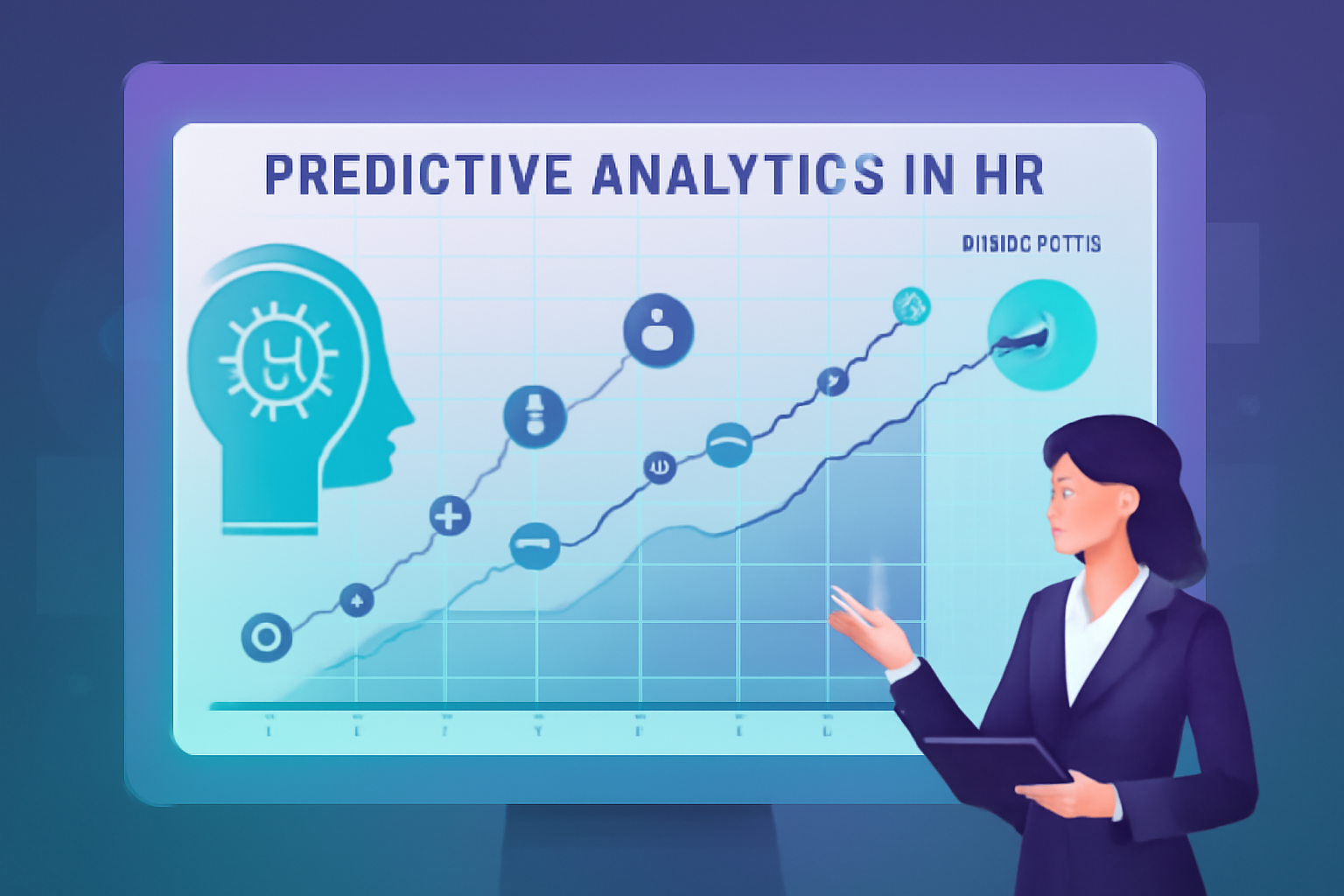
The most sophisticated HR analytics applications use predictive modeling to anticipate future outcomes and enable proactive interventions. Predictive analytics applies statistical techniques and machine learning algorithms to historical data, identifying patterns that forecast what’s likely to happen next.
Turnover prediction models analyze employee characteristics, behaviors, and experiences to calculate individual flight risk scores. Variables might include tenure, compensation relative to market, promotion history, manager effectiveness scores, engagement survey responses, and performance ratings. These models identify at-risk employees months before they resign, allowing targeted retention interventions for high-value talent.
Workforce planning models forecast future headcount needs based on business growth projections, historical hiring patterns, seasonal fluctuations, and anticipated attrition. Advanced models incorporate external factors like labor market conditions, economic indicators, and industry trends. These forecasts inform recruitment capacity planning, budget allocation, and strategic workforce decisions.
Performance prediction models identify which candidates are most likely to succeed in specific roles by analyzing the characteristics of top performers and applying those patterns to applicant data. This approach improves quality of hire and reduces mis-hire costs by focusing recruiting efforts on candidates with the highest probability of success.
Developing HR Analytics Capabilities in Your Team
Technology and data are necessary but insufficient for HR analytics success. Your team needs specific competencies to extract value from workforce data and translate insights into action.
Data literacy forms the foundation—the ability to read, understand, create, and communicate with data. HR professionals need to understand basic statistical concepts like correlation versus causation, statistical significance, and sampling methods. They should be comfortable interpreting charts and graphs, questioning data quality, and recognizing when analysis requires specialist support.
Technical skills vary by role. HR analytics specialists need proficiency with analytics tools, data visualization software, and potentially programming languages like SQL, Python, or R. HR business partners need sufficient technical understanding to consume analytics outputs and ask informed questions. HR leaders need strategic data thinking—the ability to connect analytics insights to business strategy and resource allocation decisions.
Critical thinking and business acumen separate good analysts from great ones. The ability to ask the right questions, challenge assumptions, consider alternative explanations, and connect people data to business outcomes determines whether analytics drives real change or produces interesting but unused reports.
Turning HR Analytics Into Action
The ultimate measure of HR analytics success isn’t the sophistication of your models or the beauty of your dashboards—it’s whether data insights drive better decisions and improved business outcomes. Creating an action-oriented analytics culture requires deliberate effort.
Start with business problems, not data. Identify specific challenges or opportunities facing your organization: reducing regrettable turnover in critical roles, improving diversity in leadership pipelines, accelerating new hire productivity, or optimizing compensation investments. Then determine what data and analysis would inform better decisions about those issues.
Communicate insights effectively through storytelling that connects data to business impact. Rather than presenting a chart showing 15% turnover, tell the story: “We’re losing $2.3 million annually to turnover in our sales organization, primarily among high performers in their second year. Analysis reveals that promotion timeline expectations and manager effectiveness are the primary drivers. Here’s a targeted intervention plan projected to reduce turnover by 5 percentage points and save $750,000 annually.”
Build feedback loops that measure whether analytics-informed interventions achieve intended results. If you implement a new onboarding program based on time-to-productivity analysis, track whether new hire performance actually improves. This continuous improvement cycle builds credibility, refines your analytical approaches, and demonstrates HR’s strategic value.
Privacy, Ethics, and Governance in People Analytics
With great data comes great responsibility. HR analytics raises important questions about employee privacy, algorithmic bias, and ethical use of personal information. Responsible analytics practices build trust and ensure compliance with evolving regulations.
Transparency about what data you collect, how you use it, and who has access builds employee trust. Clearly communicate the purpose of data collection and analysis, emphasizing how insights benefit both the organization and employees. Obtain appropriate consent for data usage, particularly for sensitive information or novel applications.
Protect individual privacy through data minimization (collect only what’s necessary), aggregation and anonymization where possible, and strict access controls. Ensure that analytics outputs don’t enable identification of specific individuals unless there’s a legitimate business need and appropriate authorization.
Address algorithmic bias proactively by testing predictive models for disparate impact across protected groups, diversifying the teams that build analytics solutions, and maintaining human oversight of automated decisions. Regularly audit algorithms for fairness and adjust when bias is detected.
The Future of HR Analytics: Emerging Trends and Technologies
HR analytics continues to evolve rapidly, with emerging technologies and methodologies expanding what’s possible. Artificial intelligence and machine learning are automating routine analysis, uncovering complex patterns invisible to traditional methods, and enabling real-time insights. Natural language processing analyzes unstructured data from employee surveys, exit interviews, and performance notes to extract sentiment and themes at scale.
Network analysis maps organizational communication patterns and informal influence structures, revealing how work actually gets done versus how org charts suggest it should happen. These insights inform organizational design, change management, and leadership development. Skills analytics platforms create dynamic inventories of workforce capabilities, identifying skills gaps, predicting future needs, and recommending learning pathways to close gaps.
Real-time analytics replace periodic reporting with continuous monitoring and alerts. Instead of reviewing turnover quarterly, systems flag when specific teams or demographics show concerning trends, enabling immediate investigation and intervention. Wearable technology and workplace sensors generate new data streams about collaboration patterns, workspace utilization, and even stress indicators, though these applications raise significant privacy considerations.
Getting Started: Your HR Analytics Roadmap
Building HR analytics capability is a journey, not a destination. Organizations at different maturity levels should focus on different priorities, but several principles apply universally.
Start small and build momentum. Select 3-5 metrics aligned with your most pressing business challenges and track them consistently. Demonstrate value through quick wins that solve real problems, then expand your analytics scope. Perfect data is the enemy of good enough—begin with the data you have while working to improve quality over time.
Invest in both technology and people. Tools enable analysis, but people drive insights and action. Balance investments in analytics platforms with capability building through training, hiring specialized talent, or partnering with data science teams. Secure executive sponsorship by connecting analytics initiatives to strategic priorities and demonstrating ROI through pilot projects.
Foster a data-driven culture where decisions are informed by evidence rather than intuition alone. Celebrate examples of analytics-driven improvements, make data accessible to those who need it, and create psychological safety for questioning assumptions and challenging conventional wisdom with data.
The organizations that master HR analytics gain sustainable competitive advantage through superior talent decisions, optimized workforce investments, and people strategies that directly enable business performance. By following the frameworks and practices outlined in this guide, you can transform your people data from administrative records into strategic assets that drive organizational success.
Frequently Asked Questions
What is HR analytics and why is it important for businesses?
HR analytics is the practice of collecting, analyzing, and interpreting workforce data to make informed decisions about people management and business strategy. It’s important because it transforms HR from a purely administrative function into a strategic business partner that can demonstrate ROI, predict workforce trends, and directly impact organizational performance through data-driven insights.
What are the most important HR analytics metrics to track?
The most critical HR analytics metrics include employee turnover rate, time to hire, cost per hire, employee engagement scores, absenteeism rate, time to productivity, revenue per employee, and retention rate. These metrics provide insights into recruitment efficiency, workforce stability, employee satisfaction, and the direct connection between people management and business outcomes.
How can small businesses start with HR analytics without a big budget?
Small businesses can start with HR analytics by first organizing existing data in spreadsheets, tracking 3-5 core metrics consistently, and using free or low-cost tools like Google Sheets, basic HRIS features, or entry-level analytics platforms. The key is to start simple, focus on metrics that align with specific business goals, and gradually build analytics capabilities as the organization grows.
What skills does an HR team need to implement analytics effectively?
HR teams need a combination of data literacy (understanding statistics and metrics), technical skills (using analytics tools and basic data visualization), critical thinking (interpreting data in business context), and storytelling abilities (communicating insights to stakeholders). While not everyone needs to be a data scientist, the team should collectively possess these competencies or partner with data specialists.
How does HR analytics differ from traditional HR reporting?
Traditional HR reporting typically involves backward-looking, descriptive statistics like headcount reports and compliance tracking. HR analytics goes further by using predictive models to forecast trends, prescriptive analysis to recommend actions, and statistical methods to identify causal relationships between people practices and business outcomes, enabling proactive rather than reactive decision-making.