Building a robust MLOps platform is essential for organizations looking to move machine learning models from experimental notebooks into production environments that deliver real business value. As enterprises increasingly rely on AI-driven decision-making, the gap between model development and production deployment has become a critical bottleneck. This comprehensive guide explores how to design, implement, and scale machine learning pipelines that are reliable, maintainable, and cost-effective in production settings.
The journey from a Jupyter notebook to a production-grade machine learning system involves numerous challenges: versioning datasets and models, automating training pipelines, managing infrastructure, monitoring model performance, and ensuring compliance. An effective MLOps platform addresses these challenges through standardized workflows, automation, and robust governance frameworks that enable data science teams to focus on innovation rather than operational overhead.
Understanding MLOps Platform Fundamentals
An MLOps platform serves as the operational backbone for machine learning initiatives, bridging the gap between data science experimentation and production engineering. Unlike traditional software development, machine learning systems introduce unique complexities: they depend on data quality, require continuous retraining, and their performance degrades over time due to changing real-world conditions.
The core components of a comprehensive MLOps platform include data pipeline orchestration, feature engineering and storage, model training infrastructure, experiment tracking, model registry, deployment automation, and monitoring systems. Each component must work seamlessly together to create an end-to-end workflow that supports the entire machine learning lifecycle from data ingestion to model retirement.
Modern MLOps platforms embrace principles from DevOps—continuous integration, continuous deployment, infrastructure as code, and automated testing—while adapting them to the unique requirements of machine learning workloads. This includes handling large-scale data processing, GPU-accelerated training, model versioning, and statistical validation of model performance.
MLOps Architecture Patterns for Production Systems
Designing a scalable MLOps architecture requires careful consideration of your organization’s specific needs, existing infrastructure, and maturity level. The architecture must support both batch and real-time inference, accommodate various model types and frameworks, and scale efficiently as data volumes and model complexity grow.
Layered Architecture Approach
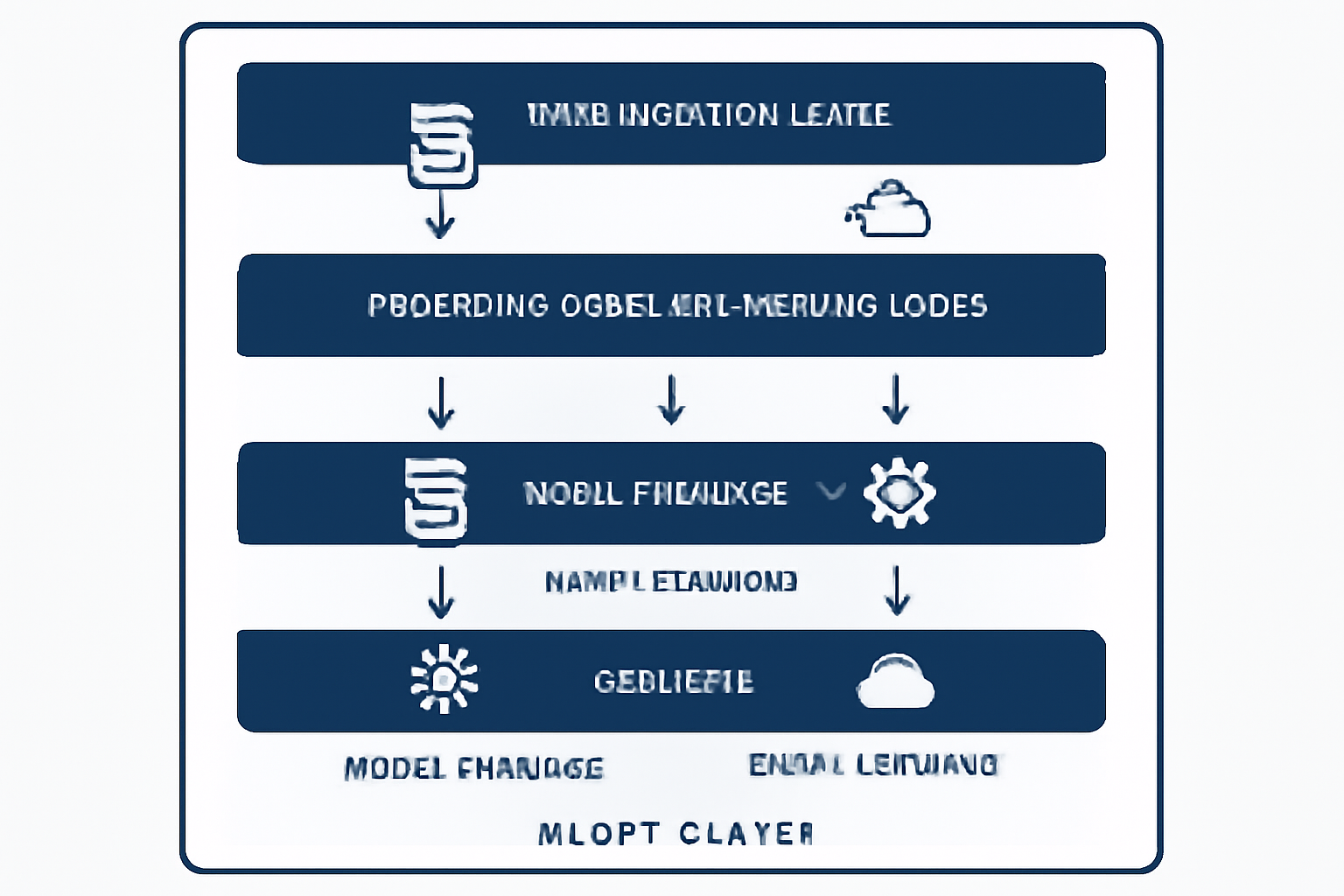
A well-designed MLOps architecture typically consists of several distinct layers. The data layer handles ingestion, storage, and versioning of raw and processed data. The feature layer manages feature engineering pipelines and serves features for both training and inference. The training layer orchestrates model development, hyperparameter tuning, and experiment tracking. The serving layer handles model deployment, scaling, and inference requests. Finally, the monitoring layer tracks model performance, data quality, and system health.
Each layer should be loosely coupled, allowing teams to swap out components or upgrade individual services without disrupting the entire system. This modularity is crucial for long-term maintainability and enables organizations to adopt best-of-breed tools for each function rather than being locked into a single vendor’s ecosystem.
Microservices vs. Monolithic ML Platforms
Organizations face a fundamental architectural decision between microservices-based and monolithic approaches. Microservices architectures decompose the MLOps platform into independent services—separate components for feature serving, model training, inference, and monitoring. This approach offers flexibility and scalability but introduces complexity in service orchestration and inter-service communication.
Monolithic platforms, conversely, provide integrated solutions where all components share common infrastructure and interfaces. While easier to deploy initially, monolithic systems can become bottlenecks as teams grow and requirements diversify. Many organizations adopt a hybrid approach, using integrated platforms for core workflows while allowing specialized microservices for unique requirements.
Implementing CI/CD for Machine Learning Models
Continuous integration and continuous deployment pipelines for machine learning differ significantly from traditional software CI/CD. ML pipelines must validate not just code quality but also data quality, model performance, and statistical properties. Automated testing must encompass unit tests for code, integration tests for pipeline components, and validation tests for model accuracy and fairness.
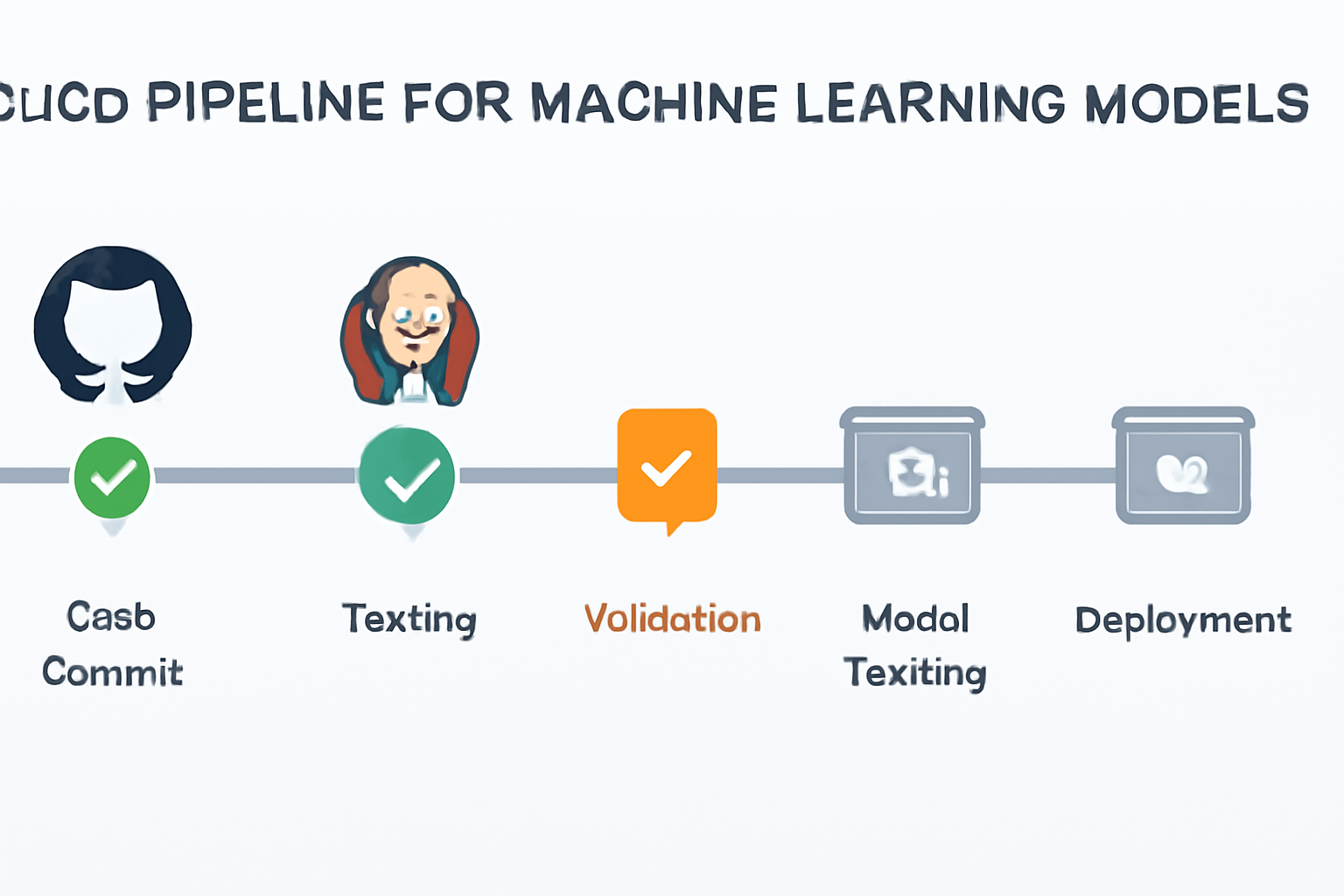
A comprehensive ML CI/CD pipeline begins with version control for code, data, and model artifacts. When developers commit changes, automated triggers initiate a series of validation steps. Code linting and unit tests verify software quality. Data validation checks ensure schema compliance and detect anomalies. Model training runs on representative datasets, and the resulting models undergo performance benchmarking against baseline metrics.
Automated Model Validation and Testing
Before deploying models to production, automated validation gates must verify multiple criteria. Performance tests compare new models against current production models using hold-out test sets. Bias and fairness tests evaluate predictions across demographic groups to ensure equitable outcomes. Inference latency tests confirm that models meet service-level objectives for response times. Resource utilization tests verify that models operate within memory and compute constraints.
Tools like Jenkins, GitHub Actions, GitLab CI, and CircleCI can orchestrate these pipelines, triggering model retraining when data drift is detected or when new training data becomes available. Integration with experiment tracking platforms like MLflow or Weights & Biases enables automatic comparison of model versions and promotes the best-performing models to production registries.
Building a Feature Store for Centralized Feature Management
Feature stores have emerged as critical infrastructure for production machine learning systems, solving the persistent challenge of feature consistency between training and serving environments. A feature store serves as a centralized repository where features are defined once, computed consistently, and made available for both offline training and online inference.
The primary benefits of implementing a feature store include eliminating training-serving skew, enabling feature reuse across teams and models, maintaining feature versioning and lineage, and optimizing feature computation through caching and materialization. Popular feature store solutions include Feast, Tecton, Hopsworks, and cloud-native offerings from AWS, Google Cloud, and Azure.
Feature Store Architecture Components
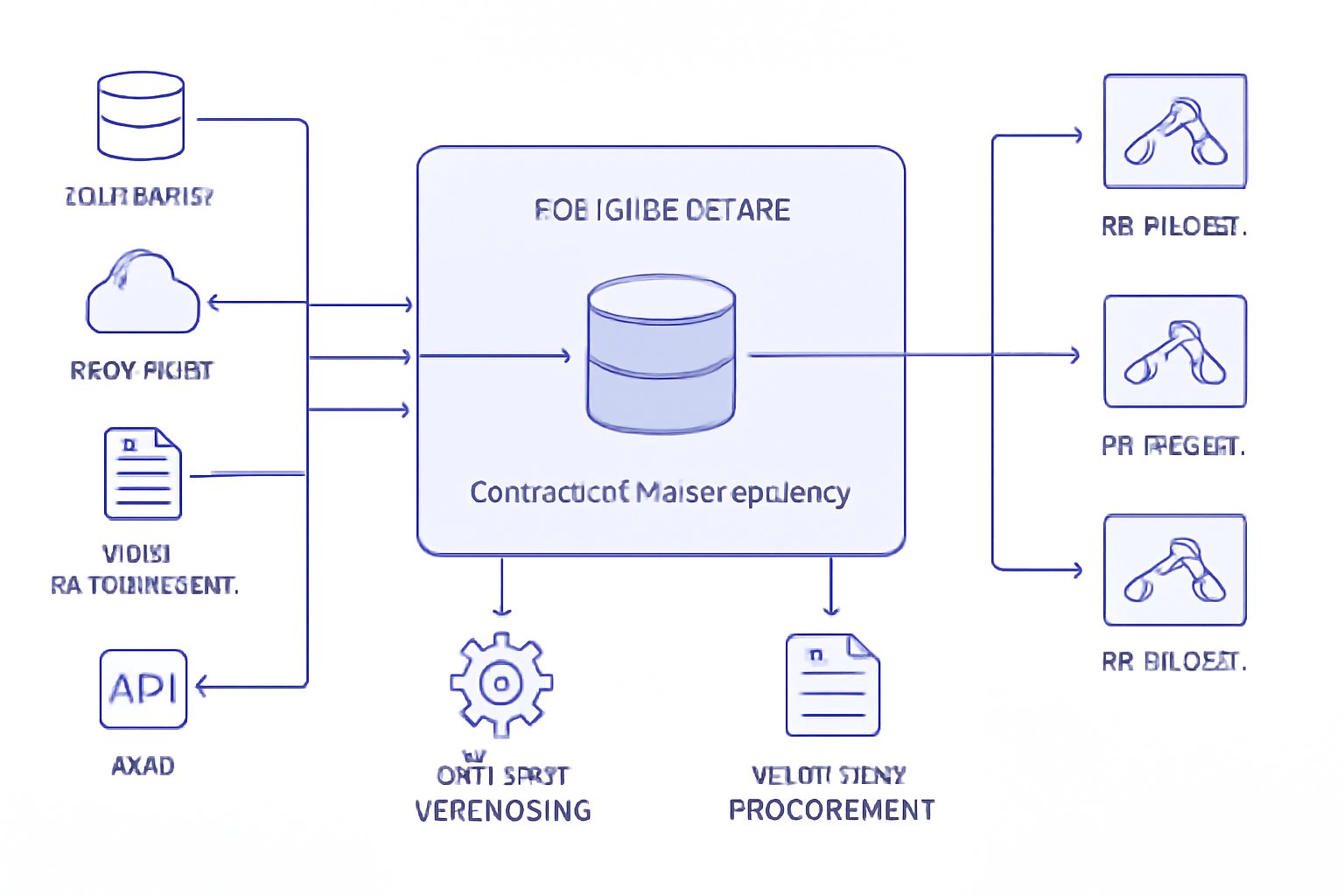
A robust feature store architecture consists of several key components. The feature registry maintains metadata about feature definitions, data types, owners, and documentation. The offline store provides historical feature values for training, typically backed by data warehouses or data lakes. The online store delivers low-latency feature retrieval for real-time inference, usually implemented with key-value stores like Redis or DynamoDB.
Feature transformation pipelines compute features from raw data sources, supporting both batch processing for historical features and streaming processing for real-time features. Point-in-time correct joins ensure that training data doesn’t leak future information, maintaining temporal consistency that reflects production conditions.
Model Monitoring and Observability in Production
Production machine learning systems require comprehensive monitoring beyond traditional application metrics. Model monitoring encompasses data quality checks, prediction distribution analysis, performance metric tracking, and drift detection. Unlike software bugs that cause immediate failures, ML model degradation often occurs gradually as real-world data patterns shift.
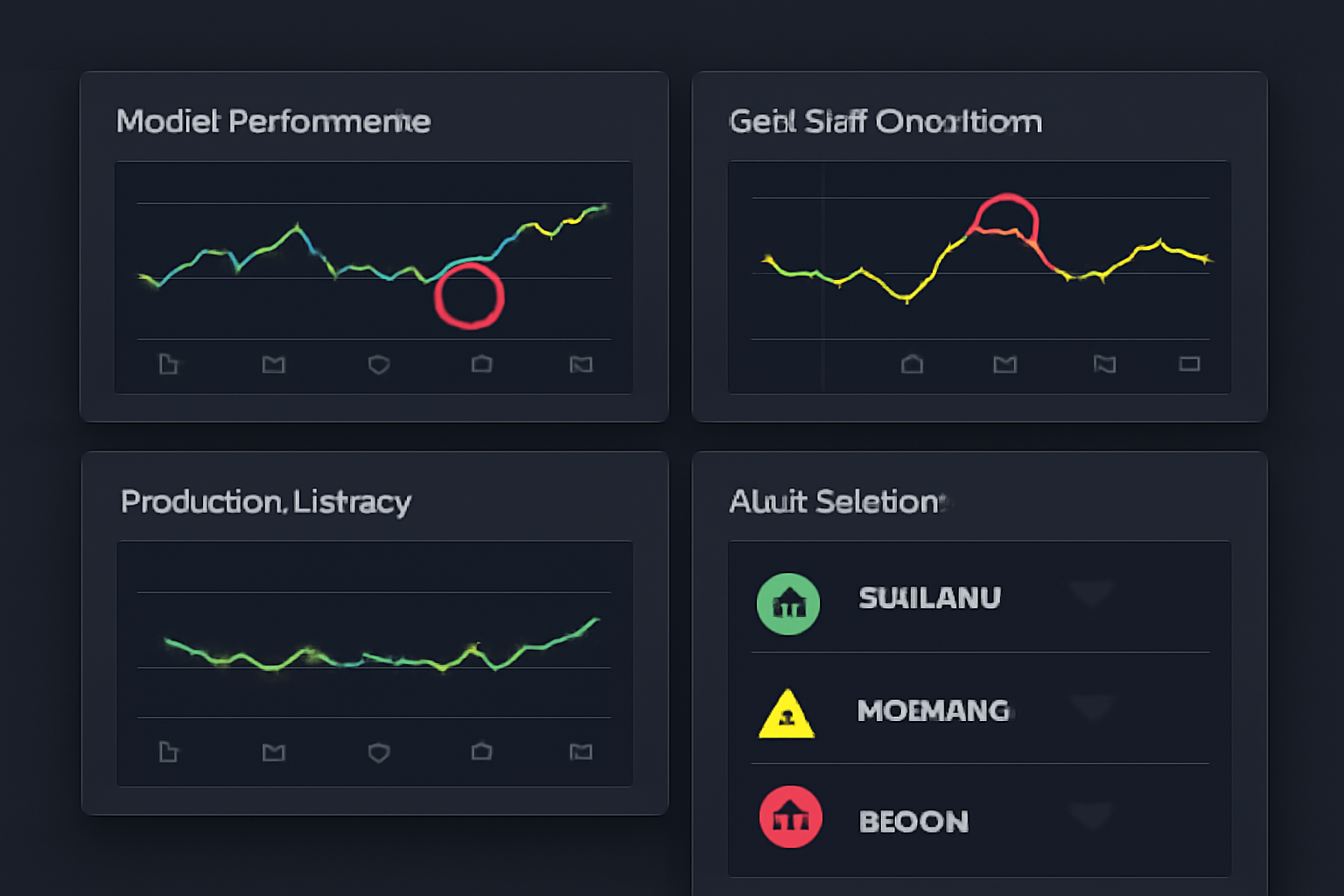
Effective monitoring strategies track multiple signal types. Data drift monitors detect changes in input feature distributions that may indicate the model is receiving data different from its training set. Concept drift monitors identify changes in the relationship between features and target variables. Performance monitoring tracks business metrics and model accuracy when ground truth labels become available. Operational monitoring measures inference latency, throughput, error rates, and resource utilization.
Implementing Drift Detection Systems
Drift detection requires establishing baselines from training data and continuously comparing production data distributions. Statistical tests like Kolmogorov-Smirnov, Chi-squared, and Population Stability Index quantify distribution differences. When drift exceeds predefined thresholds, automated alerts notify data science teams to investigate and potentially retrain models.
Advanced monitoring platforms like Arize, WhyLabs, and Fiddler provide specialized capabilities for ML observability, including automated drift detection, explainability analysis, and root cause diagnosis. Integration with alerting systems ensures that teams respond quickly to model degradation before significant business impact occurs.
Orchestrating ML Workloads with Kubernetes
Kubernetes has become the de facto standard for orchestrating containerized machine learning workloads, providing consistent deployment, scaling, and management across diverse infrastructure. ML-specific Kubernetes distributions like Kubeflow and platforms like Seldon Core extend Kubernetes with capabilities tailored for machine learning pipelines.
Containerization ensures reproducibility by packaging models with their dependencies, runtime environments, and configuration. Kubernetes orchestrates these containers, handling scheduling, resource allocation, auto-scaling, and fault tolerance. For ML workloads, Kubernetes can manage specialized resources like GPUs, coordinate distributed training across multiple nodes, and route inference requests to appropriate model versions.
Kubeflow and Seldon Core for ML Deployment
Kubeflow provides a comprehensive platform for deploying ML workflows on Kubernetes, including components for notebook servers, pipeline orchestration, hyperparameter tuning, and model serving. Kubeflow Pipelines enables data scientists to define end-to-end ML workflows as code, with automatic containerization and execution on Kubernetes clusters.
Seldon Core specializes in model serving, offering advanced deployment patterns like A/B testing, canary deployments, and multi-armed bandits. It supports various model frameworks and provides built-in monitoring, explainability, and outlier detection. Together, these tools create a powerful ecosystem for production ML on Kubernetes infrastructure.
Experiment Tracking and Model Versioning
Systematic experiment tracking is essential for reproducible machine learning research and efficient model development. As data scientists iterate through numerous experiments—testing different algorithms, hyperparameters, and feature sets—tracking tools capture metadata, metrics, artifacts, and code versions for each run.
MLflow has emerged as a popular open-source platform for experiment tracking, providing APIs to log parameters, metrics, and artifacts from training runs. Its model registry component manages model versions, stages (staging, production, archived), and annotations. DVC (Data Version Control) complements MLflow by versioning large datasets and models using Git-like workflows, storing actual data in cloud storage while tracking metadata in Git repositories.
Best Practices for Model Versioning
Effective model versioning requires tracking not just model binaries but the entire context: training data versions, feature transformations, hyperparameters, code commits, and dependency versions. Semantic versioning schemes help communicate the significance of changes—major versions for architecture changes, minor versions for retraining with new data, and patches for bug fixes.
Model lineage tracking creates an audit trail showing how each model version was created, which data was used, and which experiments led to its development. This lineage is crucial for regulatory compliance, debugging production issues, and understanding model behavior over time.
Choosing the Right Data Pipeline Orchestration Tool
Data pipeline orchestration tools coordinate the complex workflows that prepare data for ML training and inference. While Apache Airflow has long dominated this space, newer alternatives like Prefect and Dagster offer modern approaches to workflow management with improved developer experiences and better support for ML-specific requirements.
Airflow uses directed acyclic graphs (DAGs) defined in Python to schedule and monitor workflows. Its extensive operator library supports integration with numerous data sources and compute platforms. However, Airflow’s architecture can be complex to operate, and its execution model sometimes struggles with dynamic workflows common in ML pipelines.
Prefect modernizes workflow orchestration with a focus on developer experience, offering hybrid execution models, better error handling, and native support for dynamic workflows. Dagster emphasizes data-aware orchestration, treating data assets as first-class citizens and providing strong typing, testing capabilities, and integrated data quality checks particularly valuable for ML pipelines.
Model Registry and Governance
A model registry serves as the central catalog for all ML models in an organization, tracking versions, metadata, deployment status, and approval workflows. Beyond simple versioning, modern registries enforce governance policies, manage access controls, and maintain compliance documentation required for regulated industries.
Governance frameworks define approval processes for model promotion through environments (development, staging, production), document model risk assessments, track fairness and bias evaluations, and maintain audit logs of all model changes. Integration with CI/CD pipelines automates governance checks, preventing non-compliant models from reaching production.
Optimizing Real-Time ML Inference
Real-time inference presents unique challenges: predictions must be delivered within strict latency budgets (often under 100ms), systems must scale to handle variable request rates, and infrastructure costs must remain manageable. Optimization strategies span model architecture, serving infrastructure, and caching approaches.
Model optimization techniques include quantization (reducing precision from float32 to int8), pruning (removing unnecessary weights), and knowledge distillation (training smaller models to mimic larger ones). Serving platforms like TensorFlow Serving, TorchServe, and NVIDIA Triton optimize inference through batching, multi-model serving, and GPU utilization.
Caching strategies dramatically reduce latency for repeated predictions. Feature caching stores computed features in low-latency stores, while prediction caching serves identical requests from cache. Edge deployment moves inference closer to users, reducing network latency at the cost of more complex deployment management.
Cost Optimization Strategies for MLOps
Machine learning infrastructure can consume substantial cloud budgets, particularly for training large models and serving high-volume inference workloads. Cost optimization requires balancing performance requirements against infrastructure spending through strategic choices in compute resources, scheduling, and architecture.
Training cost optimization starts with right-sizing compute instances—using spot instances for fault-tolerant workloads, scheduling training jobs during off-peak hours, and implementing early stopping to avoid unnecessary computation. Distributed training frameworks enable using multiple smaller instances instead of expensive large instances, often reducing costs while maintaining training speed.
Inference cost optimization focuses on efficient resource utilization through auto-scaling, batch prediction for non-real-time use cases, and model optimization to reduce compute requirements. Serverless inference platforms like AWS Lambda or Google Cloud Functions eliminate idle resource costs but require careful evaluation of cold start latencies and per-request pricing.
Building Your MLOps Platform: Getting Started
Implementing a comprehensive MLOps platform is a journey, not a destination. Organizations should adopt an incremental approach, starting with the most critical pain points and gradually expanding capabilities as teams mature. Begin by establishing version control for code, data, and models. Implement basic CI/CD pipelines that automate model training and validation. Deploy monitoring to detect when models degrade in production.
As foundational practices solidify, add more sophisticated capabilities: feature stores to improve consistency, experiment tracking to accelerate research, and advanced deployment patterns like canary releases. Continuously evaluate and refine your platform based on team feedback and evolving requirements. The goal is not perfection but continuous improvement in the reliability, efficiency, and velocity of your machine learning systems.
Success in MLOps requires cultural change alongside technical implementation. Foster collaboration between data scientists, ML engineers, and operations teams. Establish clear ownership and responsibilities. Document standards and best practices. Invest in training to ensure teams can effectively use platform capabilities. With the right combination of tools, processes, and culture, your MLOps platform will transform machine learning from experimental projects into reliable production systems that drive measurable business value.