The landscape of business operations is undergoing a fundamental transformation as organizations across industries adopt AI solutions for business to drive efficiency, innovation, and competitive advantage. From small startups to Fortune 500 enterprises, artificial intelligence is no longer a futuristic concept but a practical necessity for companies seeking to optimize operations, enhance customer experiences, and unlock insights from vast amounts of data. This comprehensive guide explores everything you need to know about implementing AI solutions in your organization, measuring their impact, and achieving meaningful returns on your investment.
Understanding AI Solutions for Business: What They Are and Why They Matter
Artificial intelligence solutions encompass a broad range of technologies that enable machines to perform tasks traditionally requiring human intelligence. In the business context, these solutions include machine learning algorithms, natural language processing systems, computer vision applications, predictive analytics platforms, and intelligent automation tools. The core value proposition lies in AI’s ability to process massive datasets, identify patterns invisible to human analysis, and execute decisions at speeds and scales impossible through manual methods.
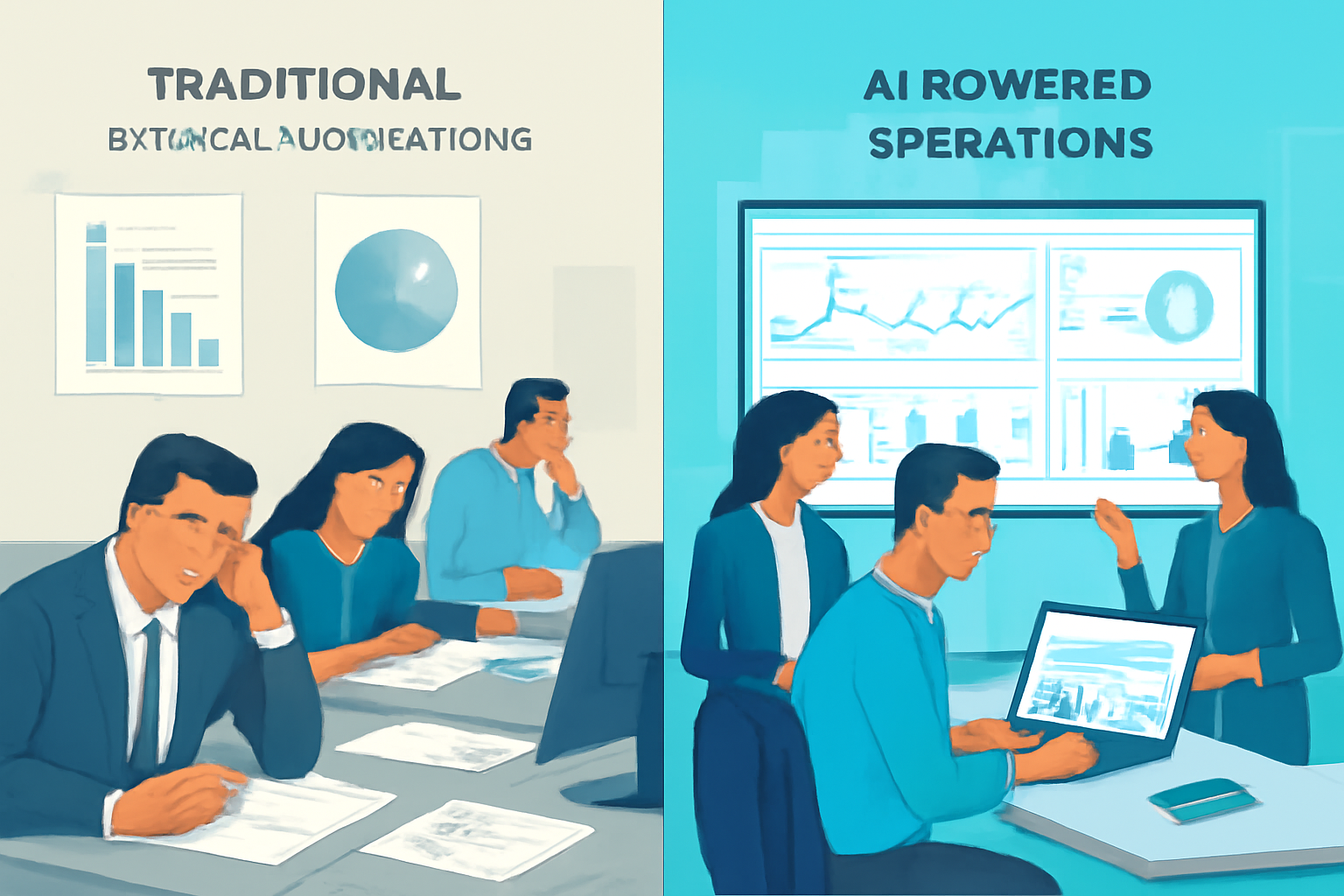
The business case for AI adoption has never been stronger. Organizations implementing AI solutions report average productivity increases of 40%, customer satisfaction improvements of 35%, and operational cost reductions ranging from 20-30%. Beyond these metrics, AI provides strategic advantages including enhanced decision-making capabilities, personalized customer experiences, proactive problem identification, and the ability to scale operations without proportional increases in headcount or infrastructure.
Modern AI solutions are remarkably diverse in their applications. Customer service departments deploy intelligent chatbots that handle routine inquiries 24/7 while escalating complex issues to human agents. Marketing teams leverage AI-powered automation platforms to deliver personalized content to millions of customers simultaneously. Supply chain managers use predictive analytics to forecast demand fluctuations and optimize inventory levels. Financial analysts employ machine learning models to detect fraudulent transactions in real-time. This versatility makes AI relevant across virtually every business function and industry vertical.
Key Categories of AI Solutions for Business Applications
Conversational AI and Intelligent Chatbots
Conversational AI represents one of the most immediately impactful business applications, transforming customer service operations through intelligent chatbots and virtual assistants. These systems utilize natural language processing to understand customer inquiries, sentiment analysis to gauge emotional states, and machine learning to improve responses over time. Leading organizations report handling 60-80% of routine customer inquiries through AI-powered chatbots, dramatically reducing response times from hours to seconds while cutting support costs by 30% or more.
Modern chatbot solutions extend far beyond simple FAQ automation. Advanced implementations can process complex multi-turn conversations, access customer history across channels, execute transactions, schedule appointments, and seamlessly transfer to human agents when necessary. Integration with CRM systems enables personalized interactions based on customer preferences, purchase history, and previous service interactions. The result is a customer experience that feels responsive and personal while operating at unprecedented scale and efficiency.
Predictive Analytics and Forecasting
Predictive analytics solutions harness machine learning algorithms to analyze historical data patterns and forecast future outcomes with remarkable accuracy. Sales teams use these systems to identify high-probability leads, predict deal closure rates, and optimize pricing strategies. Operations managers forecast demand fluctuations to prevent stockouts and minimize excess inventory. HR departments predict employee turnover risk and identify factors contributing to retention. Financial planning teams model various scenarios to support strategic decision-making under uncertainty.
The competitive advantage of predictive analytics lies in its ability to process variables and interactions far beyond human analytical capacity. While traditional forecasting might consider 5-10 factors, AI models routinely analyze hundreds or thousands of variables simultaneously, identifying non-obvious correlations and complex patterns. This sophistication translates to forecast accuracy improvements of 20-50% compared to traditional statistical methods, enabling more confident decision-making and better resource allocation.
Computer Vision and Visual Intelligence
Computer vision applications enable machines to interpret and act on visual information from the physical world. Retail environments deploy these systems for automated checkout, inventory monitoring, and loss prevention. Manufacturing facilities use computer vision for quality control inspection, detecting defects invisible to human inspectors. Healthcare providers leverage visual AI for medical imaging analysis, identifying potential issues earlier and more accurately than traditional methods. Security operations employ facial recognition and anomaly detection to enhance safety protocols.
AI Implementation Strategy: Building Your Roadmap to Success
Successful AI implementation requires systematic planning and execution rather than ad-hoc technology adoption. The most effective approach begins with a comprehensive organizational assessment identifying high-impact use cases aligned with strategic business objectives. This assessment should evaluate current data infrastructure, technical capabilities, workforce readiness, and potential barriers to adoption. Organizations that invest time in this foundational analysis achieve 3x higher success rates in their AI initiatives compared to those rushing directly to technology deployment.
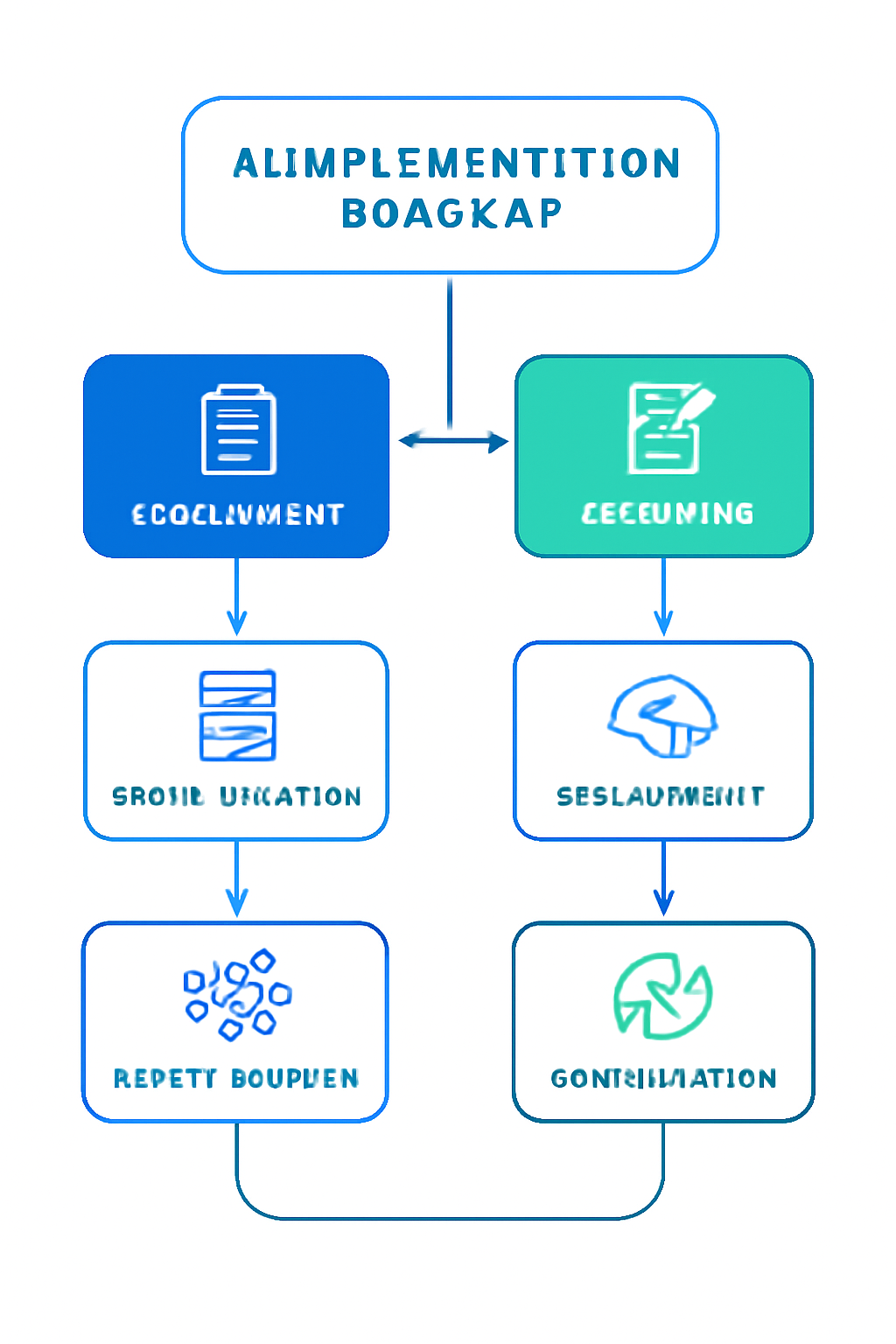
The implementation roadmap typically follows five critical phases. First, the discovery phase involves stakeholder interviews, process mapping, and opportunity identification to pinpoint where AI can deliver maximum value. Second, the pilot phase tests selected use cases on a limited scale, validating technical feasibility and business impact before broader rollout. Third, the integration phase connects AI solutions with existing business systems, ensuring seamless data flow and operational compatibility. Fourth, the scaling phase expands successful pilots across the organization while maintaining quality and performance. Finally, the optimization phase continuously refines models, processes, and outcomes based on real-world performance data.
Data readiness represents the most common implementation bottleneck. AI models require substantial volumes of clean, relevant, properly labeled data to train effectively. Organizations should audit existing data assets, identify gaps, establish data governance protocols, and implement collection mechanisms well before model development begins. This preparation phase often consumes 60-70% of total implementation time but proves essential for achieving desired outcomes. Companies that shortcut data preparation consistently experience model performance issues, requiring costly rework and delaying value realization.
Building the Right Team and Capabilities
AI implementation demands multidisciplinary teams combining technical expertise with deep business domain knowledge. Core team members typically include data scientists who develop and train models, machine