Table of Contents
- The Evolution from Traditional to AI-Powered Credit Scoring
- How Machine Learning Credit Models Work
- Types of Machine Learning Algorithms in Credit Scoring
- The Role of Alternative Data in Expanding Credit Access
- Explainability and Transparency in AI Credit Decisions
- Bias Detection and Fair Lending Compliance
- Real-World Impact and Performance Metrics
- Implementation Challenges and Best Practices
- The Future of AI in Credit Scoring
- Frequently Asked Questions
The lending industry is undergoing a fundamental transformation as AI-powered credit scoring models replace and augment traditional methods of assessing borrower risk. While conventional credit scores have served financial institutions for decades, machine learning algorithms now analyze thousands of data points to make more accurate, inclusive, and faster lending decisions. This technological shift is reshaping who gets access to credit, how quickly loans are approved, and the overall fairness of the financial system.
The Evolution from Traditional to AI-Powered Credit Scoring
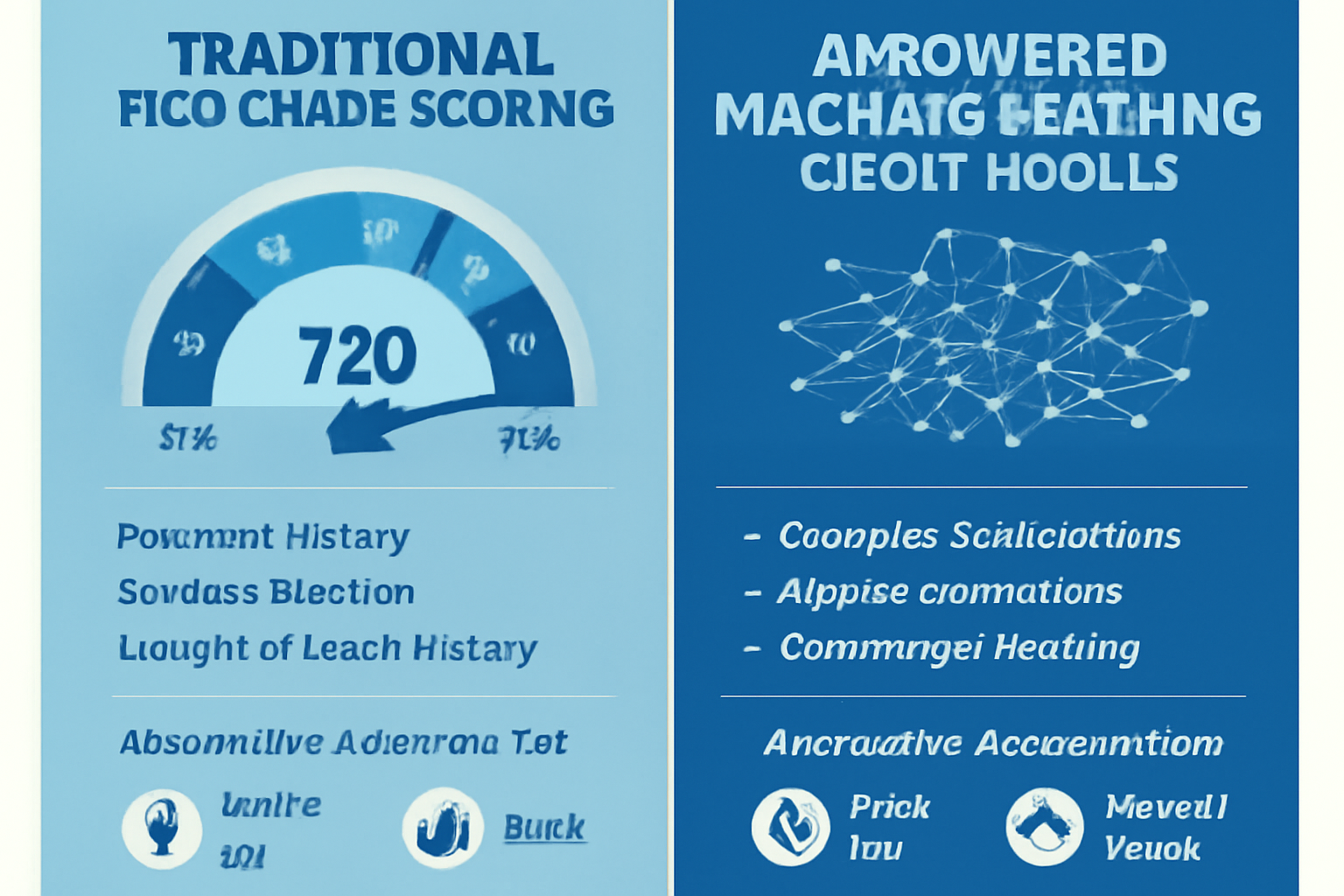
Traditional credit scoring models like FICO and VantageScore rely on a limited set of variables drawn primarily from credit bureau data: payment history, credit utilization, length of credit history, types of credit, and recent credit inquiries. These models use statistical regression techniques developed in the 1950s and 1960s, applying fixed weights to predetermined factors.
In contrast, AI-powered credit scoring employs machine learning algorithms that can process exponentially more variables and identify complex, non-linear relationships between data points. These models continuously learn and adapt as new data becomes available, improving their predictive accuracy over time. Techniques such as gradient boosting machines, random forests, neural networks, and ensemble methods enable lenders to assess risk with unprecedented precision.
The shift to machine learning models addresses critical limitations of traditional scoring. Approximately 45 million Americans have insufficient credit history to generate a traditional credit score, effectively excluding them from mainstream lending. AI models can evaluate these “credit invisible” individuals by incorporating alternative data sources that demonstrate financial responsibility through different channels.
How Machine Learning Credit Models Work
Machine learning credit scoring models operate through a multi-stage process that begins with data collection and ends with a risk prediction. The first stage involves aggregating data from traditional credit bureaus alongside alternative data sources. This comprehensive dataset provides a 360-degree view of a borrower’s financial behavior and capacity to repay.
Data Sources and Feature Engineering
Modern AI credit models ingest data from diverse sources including bank account transaction histories, utility and telecommunications payment records, rental payment data, educational background, employment stability indicators, and even behavioral signals like how applicants interact with loan application forms. Feature engineering transforms this raw data into meaningful variables that machine learning algorithms can process effectively.
Advanced models may analyze over 10,000 features compared to the handful used in traditional scoring. These features capture patterns such as income volatility, spending categorization, savings behavior, and cash flow timing. The algorithms identify which combinations of features most strongly predict default risk, often discovering relationships that human analysts would never detect.
Model Training and Validation
Machine learning models learn from historical data by analyzing thousands or millions of past loan applications and their outcomes. The training process involves feeding the algorithm labeled data—loans that were repaid successfully versus those that defaulted—and allowing it to identify patterns that distinguish good borrowers from risky ones.
Rigorous validation processes ensure models generalize well to new applicants. Lenders typically split their historical data into training, validation, and test sets, using techniques like cross-validation to prevent overfitting. The best-performing models undergo backtesting against held-out data to verify their predictive power before deployment.
Types of Machine Learning Algorithms in Credit Scoring
Different machine learning approaches offer distinct advantages for credit risk assessment. Logistic regression, while technically a traditional statistical method, serves as a baseline that many lenders enhance with machine learning features. Its interpretability makes it valuable for regulatory compliance, though it lacks the predictive power of more advanced techniques.
Decision trees and random forests create rule-based models that segment borrowers into risk categories based on sequential decision points. Random forests combine hundreds or thousands of decision trees, with each tree voting on the final risk classification. This ensemble approach reduces overfitting while maintaining reasonable interpretability.
Gradient boosting machines (GBMs), including implementations like XGBoost and LightGBM, have become industry favorites for credit scoring. These algorithms build models sequentially, with each new model correcting errors made by previous ones. GBMs consistently achieve superior predictive accuracy and handle missing data effectively, making them ideal for real-world lending scenarios.
Neural networks and deep learning models can capture extremely complex patterns in high-dimensional data. While they offer the highest potential accuracy, their “black box” nature presents challenges for regulatory compliance and borrower transparency. Some lenders reserve deep learning for specific use cases like fraud detection while using more interpretable models for primary credit decisions.
The Role of Alternative Data in Expanding Credit Access
Alternative data represents the most transformative aspect of AI-powered credit scoring, enabling lenders to evaluate borrowers who lack traditional credit histories. Bank account data provides rich insights into income stability, spending patterns, and savings behavior. Analyzing recurring deposits, expense categories, and account balance trends helps predict repayment capacity even for first-time borrowers.
Utility and telecommunications payment histories demonstrate consistent financial responsibility. Someone who pays their electricity, water, and phone bills on time for years shows creditworthiness even without credit cards or loans. Several fintech lenders now incorporate rental payment data, recognizing that on-time rent payments—often a borrower’s largest monthly expense—strongly indicate credit reliability.
Educational credentials and employment data add predictive value, particularly for young professionals with limited credit histories. Graduation from certain institutions or employment in stable industries correlates with lower default risk. However, lenders must carefully implement these variables to avoid discriminatory practices and ensure compliance with fair lending regulations.
Explainability and Transparency in AI Credit Decisions
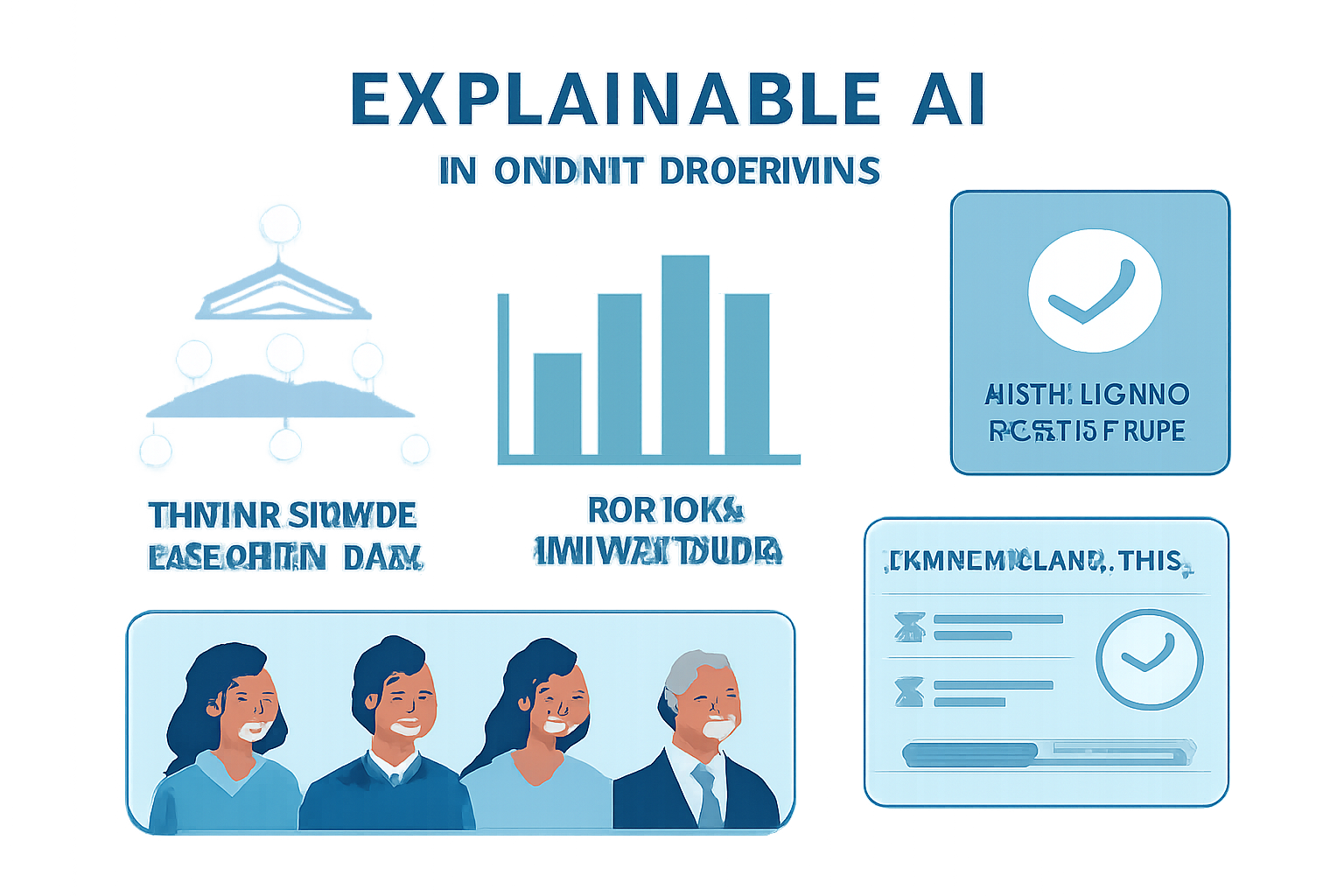
Regulatory requirements demand that lenders explain credit decisions to applicants, creating tension with complex machine learning models that operate as “black boxes.” The Fair Credit Reporting Act requires adverse action notices that specify reasons for credit denials, while the Equal Credit Opportunity Act prohibits discrimination based on protected characteristics.
Explainable AI (XAI) techniques bridge this gap by making machine learning decisions interpretable. SHAP (SHapley Additive exPlanations) values quantify each feature’s contribution to a specific credit decision, enabling lenders to provide applicants with clear reasons for approvals or denials. LIME (Local Interpretable Model-agnostic Explanations) creates simplified models that approximate complex algorithm behavior for individual predictions.
Model documentation and governance frameworks ensure AI credit models remain auditable and compliant. Leading lenders maintain detailed records of model development, training data, validation results, and ongoing performance monitoring. Regular model reviews assess whether algorithms produce fair outcomes across demographic groups and identify any emerging biases.
Bias Detection and Fair Lending Compliance
While AI models can reduce human bias in lending decisions, they can also perpetuate or amplify historical discrimination if not carefully designed. Biased training data—reflecting past discriminatory lending practices—can teach algorithms to replicate those same inequities. Protected characteristics like race and gender must be excluded from models, but proxy variables that correlate with these characteristics can still introduce indirect bias.
Sophisticated bias testing protocols evaluate model fairness across demographic groups. Lenders analyze approval rates, interest rate distributions, and default predictions to ensure equitable treatment. Disparate impact testing identifies whether seemingly neutral criteria disproportionately affect protected groups. When bias is detected, data scientists can adjust model features, rebalance training data, or apply fairness constraints during model optimization.
Regulatory scrutiny of AI lending continues to intensify. The Consumer Financial Protection Bureau, Federal Reserve, and other agencies have issued guidance on responsible AI use in credit decisions. Lenders must demonstrate that their models comply with fair lending laws, maintain adequate documentation, and can explain decisions to regulators and consumers alike.
Real-World Impact and Performance Metrics
Financial institutions implementing AI-powered credit scoring report significant improvements across multiple performance dimensions. Default prediction accuracy typically increases by 15-25% compared to traditional models, directly reducing credit losses. This enhanced risk assessment allows lenders to approve more borrowers at appropriate interest rates while maintaining portfolio quality.
Processing speed represents another major advantage. Machine learning models evaluate applications in seconds or minutes rather than days, dramatically improving customer experience. Automated decisioning handles straightforward applications instantly, freeing human underwriters to focus on complex cases requiring judgment and expertise.
Financial inclusion metrics demonstrate AI’s potential to expand credit access. Lenders using alternative data and machine learning have approved 20-30% more applicants from underserved populations while maintaining acceptable risk levels. Young adults, immigrants, and individuals recovering from financial setbacks gain access to credit that traditional scoring would deny them.
Implementation Challenges and Best Practices
Deploying AI credit scoring models requires substantial technical infrastructure and expertise. Data integration challenges emerge when consolidating information from multiple sources with varying formats, quality levels, and update frequencies. Robust data pipelines must cleanse, standardize, and validate inputs before feeding them to machine learning algorithms.
Model governance and monitoring systems track performance over time, detecting when models degrade or market conditions change. Credit models can become less accurate as economic environments shift, requiring periodic retraining or recalibration. Automated monitoring alerts data science teams when key metrics drift beyond acceptable thresholds.
Organizational change management proves equally important as technical implementation. Credit officers and underwriters must understand how AI models work, when to trust their recommendations, and when human judgment should override algorithmic decisions. Training programs build institutional knowledge while fostering appropriate skepticism and oversight.
The Future of AI in Credit Scoring
Emerging technologies promise to further transform credit assessment in coming years. Real-time data integration will enable continuous credit monitoring rather than static point-in-time scores. Lenders could adjust credit limits or interest rates dynamically based on changing financial circumstances, benefiting both borrowers and lenders.
Federated learning techniques may allow multiple lenders to collaboratively train models without sharing sensitive customer data, improving predictions while preserving privacy. Blockchain-based credit histories could give consumers control over their financial data while enabling instant verification of credentials and payment histories.
Regulatory frameworks will continue evolving to address AI-specific challenges in lending. Clearer guidance on explainability requirements, bias testing standards, and model validation expectations will help lenders deploy AI responsibly. International coordination may emerge as credit scoring becomes increasingly global and data-driven.
The transformation of credit scoring through AI and machine learning represents one of the most significant innovations in financial services. By analyzing richer datasets with more sophisticated algorithms, lenders can make better decisions—approving more qualified borrowers, pricing risk more accurately, and expanding financial inclusion. Success requires balancing innovation with responsibility, ensuring that AI-powered credit scoring delivers on its promise of fairer, more accessible, and more efficient lending for all.
Frequently Asked Questions
How does AI-powered credit scoring differ from traditional FICO scores?
AI-powered credit scoring analyzes thousands of data points including alternative data like utility payments, rent history, and transaction patterns, while traditional FICO scores rely primarily on credit history, payment history, and debt utilization. Machine learning models can identify complex patterns and relationships that traditional scoring methods miss, enabling more accurate risk assessment and expanded access to credit for individuals with thin credit files.
What types of alternative data do machine learning credit models use?
Machine learning credit models incorporate diverse alternative data sources including bank account transaction patterns, utility and rent payment history, mobile phone usage, education and employment data, social media activity (in some markets), and behavioral data like application completion patterns. These data points help lenders assess creditworthiness for borrowers who lack traditional credit histories, particularly benefiting young adults, immigrants, and underbanked populations.
Are AI credit scoring models fair and unbiased?
AI credit scoring models can be more fair than traditional methods when properly designed, as they focus on predictive financial behavior rather than demographic factors. However, they require careful monitoring for algorithmic bias, regular fairness audits, and explainable AI frameworks to ensure compliance with fair lending regulations. Leading lenders implement bias detection tools and diverse training datasets to minimize discrimination and ensure equitable lending decisions.
How accurate are machine learning models at predicting loan defaults?
Machine learning credit models typically achieve 15-25% higher accuracy in predicting loan defaults compared to traditional scoring methods, with some advanced models reaching 85-90% accuracy rates. The improved performance comes from analyzing thousands of variables and detecting subtle patterns in borrower behavior. However, accuracy varies by model type, data quality, and the specific lending product being assessed.
What regulations govern AI-powered credit scoring in lending?
AI-powered credit scoring must comply with regulations including the Fair Credit Reporting Act (FCRA), Equal Credit Opportunity Act (ECOA), Fair Lending laws, and GDPR in Europe. These regulations require model transparency, the ability to provide adverse action notices explaining credit denials, regular bias testing, and documentation of model development. Lenders must also ensure their AI models don’t discriminate based on protected characteristics like race, gender, or age.