Table of Contents
Artificial intelligence has fundamentally transformed how online retailers operate, compete, and grow in today’s digital marketplace. AI in e-commerce is no longer a futuristic concept reserved for tech giants—it’s an accessible, practical toolkit that businesses of all sizes leverage to automate operations, personalize customer experiences, and accelerate revenue growth. From intelligent chatbots that never sleep to recommendation engines that predict what customers want before they know it themselves, AI technologies are reshaping every aspect of the online shopping journey.
The e-commerce landscape has become increasingly competitive, with customers expecting instant responses, personalized experiences, and seamless transactions across all touchpoints. Traditional manual approaches simply cannot scale to meet these demands. This is where artificial intelligence steps in, processing vast amounts of data in milliseconds, identifying patterns invisible to human analysis, and executing sophisticated strategies that would require armies of employees to replicate manually.
This comprehensive guide explores the complete spectrum of AI applications in e-commerce, from customer-facing technologies that enhance shopping experiences to backend systems that optimize operations and prevent costly mistakes. Whether you’re running a startup online store or managing an enterprise retail operation, understanding these AI capabilities will be essential for remaining competitive in the years ahead.
The Foundation: Understanding AI in E-commerce
At its core, AI in e-commerce refers to the application of machine learning algorithms, natural language processing, computer vision, and predictive analytics to solve retail-specific challenges. These technologies learn from historical data, identify patterns, make predictions, and continuously improve their performance without explicit programming for every scenario.
The primary categories of e-commerce AI include customer experience enhancement, operational automation, sales optimization, and risk management. Each category addresses specific pain points that online retailers face daily—from abandoned carts and inefficient customer service to inventory mismanagement and fraudulent transactions.
What makes AI particularly powerful in e-commerce is its ability to operate at scale while maintaining personalization. A single AI system can simultaneously manage thousands of customer interactions, each tailored to individual preferences, purchase history, and real-time behavior. This combination of scale and personalization was impossible before modern AI technologies matured.
AI Chatbots: Revolutionizing Customer Service in Online Retail
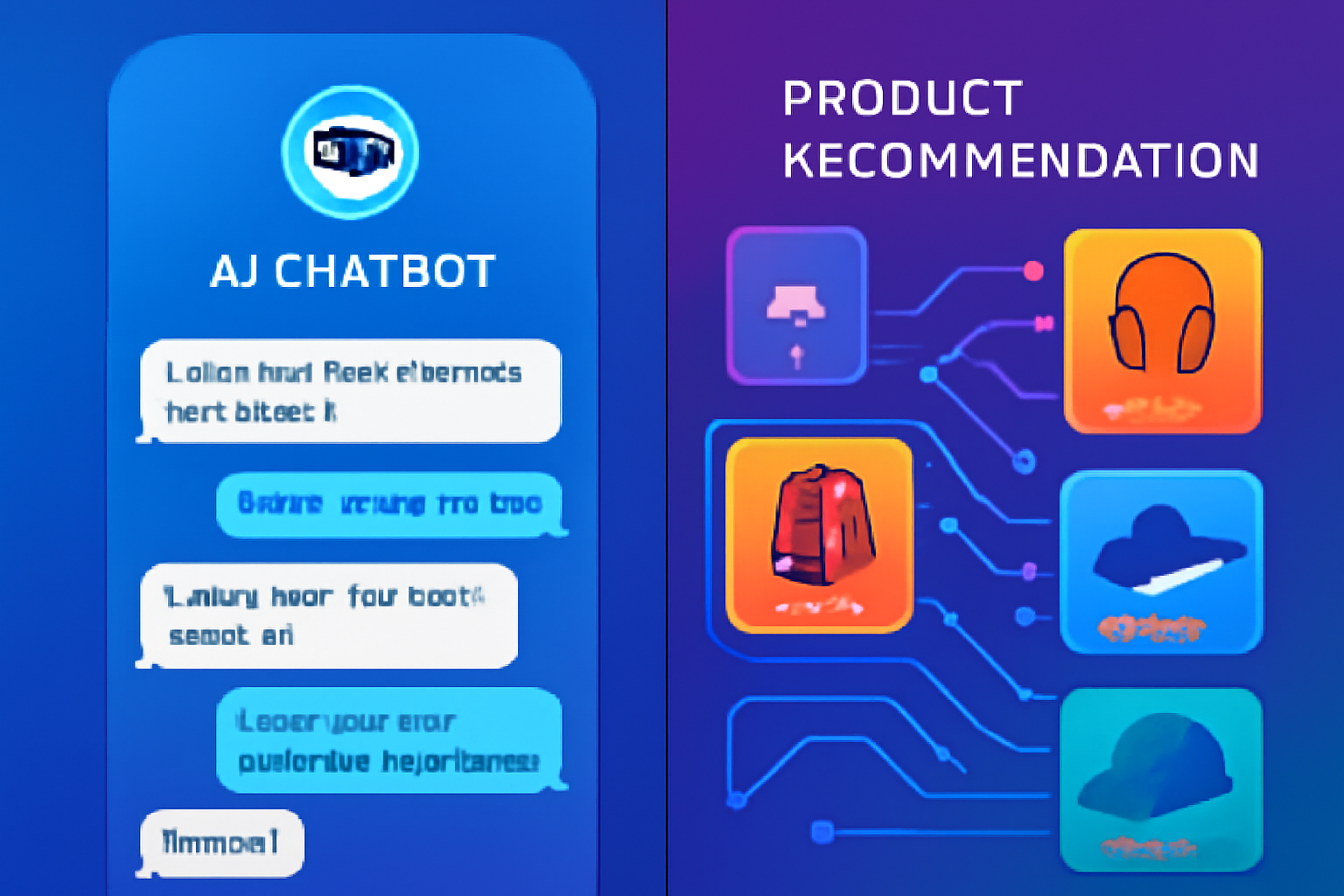
Customer service has traditionally been one of the most resource-intensive aspects of e-commerce operations. AI chatbots have transformed this landscape by providing instant, 24/7 support that handles the majority of routine inquiries without human intervention. Modern chatbots powered by natural language processing understand context, sentiment, and intent, delivering conversations that feel increasingly natural and helpful.
These intelligent assistants can answer product questions, track orders, process returns, and guide customers through complex decision-making processes. Advanced implementations integrate with inventory systems, CRM platforms, and knowledge bases to provide accurate, real-time information. When chatbots encounter questions beyond their capabilities, they seamlessly escalate to human agents with full conversation context, ensuring no customer frustration.
The business impact is substantial: companies implementing AI chatbots typically reduce customer service costs by 30-40% while simultaneously improving response times and customer satisfaction scores. The technology handles repetitive questions efficiently, freeing human agents to focus on complex issues that require empathy, creativity, and nuanced problem-solving.
Product Recommendation Engines That Drive Revenue
AI-powered product recommendation engines represent one of the highest-ROI applications of artificial intelligence in online retail. These systems analyze customer behavior, purchase history, browsing patterns, and product relationships to suggest items that individual shoppers are most likely to purchase. The sophistication extends far beyond simple
Frequently Asked Questions
How does AI improve e-commerce sales and conversion rates?
AI improves e-commerce sales through personalized product recommendations, dynamic pricing optimization, and intelligent chatbots that guide customers through the buying journey. These technologies can increase conversion rates by 20-30% by delivering highly relevant experiences that match individual customer preferences and behaviors in real-time.
What are the most important AI tools for small e-commerce businesses?
The most impactful AI tools for small e-commerce businesses include chatbots for customer service automation, recommendation engines to increase average order value, and email marketing automation platforms. These tools offer the best ROI by reducing operational costs while directly increasing revenue without requiring large upfront investments.
How much does it cost to implement AI in an e-commerce store?
AI implementation costs for e-commerce range from free or low-cost SaaS solutions (starting at $50-200/month) to enterprise custom solutions ($50,000+). Most small to medium businesses can start with affordable plug-and-play AI tools like Tidio for chatbots, Nosto for recommendations, or Klaviyo for email automation without significant upfront investment.
Can AI replace human customer service teams in e-commerce?
AI cannot fully replace human customer service teams but serves as a powerful complement that handles 60-80% of routine inquiries automatically. Complex issues, emotional situations, and nuanced problems still require human intervention, making the ideal approach a hybrid model where AI handles initial contact and simple questions while escalating complex cases to human agents.
What is the ROI timeline for AI implementation in e-commerce?
Most e-commerce businesses see measurable ROI from AI implementation within 3-6 months, with chatbots and recommendation engines often showing positive returns within the first 60-90 days. The timeline varies based on the specific AI application, with customer service automation typically delivering faster returns than more complex predictive analytics systems.