Table of Contents
- Understanding AI Solutions for Business: Core Technologies and Applications
- Key Benefits of Implementing AI Solutions
- Calculating ROI on AI Implementation
- Building Your AI Implementation Roadmap
- Selecting AI Vendors and Solutions
- Building Your AI Implementation Team
- Integration with Existing Business Systems
- Measuring Long-Term AI Success
- Frequently Asked Questions
AI solutions for business have transformed from futuristic concepts into practical tools that drive measurable results across organizations of all sizes. Whether you’re a small business exploring automation or an enterprise seeking competitive advantage, understanding how to implement, measure, and optimize artificial intelligence can unlock unprecedented efficiency, cost savings, and growth opportunities. This comprehensive guide walks you through everything you need to know about selecting, deploying, and maximizing the value of AI solutions in your business environment.
Understanding AI Solutions for Business: Core Technologies and Applications
Artificial intelligence encompasses multiple technologies that enable machines to perform tasks traditionally requiring human intelligence. For businesses, the most impactful AI solutions include machine learning algorithms that identify patterns in data, natural language processing for customer interactions, computer vision for image analysis, and predictive analytics that forecast trends and behaviors.
Modern AI solutions for business typically fall into several categories: customer-facing applications like chatbots and recommendation engines, operational tools including process automation and quality control systems, analytical platforms for business intelligence and forecasting, and specialized solutions for industry-specific challenges. Understanding which category addresses your specific business needs is the first step toward successful implementation.
The democratization of AI through cloud platforms has made sophisticated capabilities accessible to organizations without massive IT budgets. Companies like Microsoft Azure, Google Cloud, and AWS offer pre-built AI services that integrate with existing systems, while specialized vendors provide industry-specific solutions for healthcare, finance, retail, manufacturing, and professional services.
Key Benefits of Implementing AI Solutions
Organizations implementing AI solutions experience transformative benefits across multiple dimensions. Cost reduction through automation represents the most immediate impact, with businesses reporting 25-40% decreases in operational expenses for automated processes. AI-powered customer service systems handle routine inquiries 24/7, reducing support staff requirements while improving response times from hours to seconds.
Revenue enhancement opportunities emerge through AI-driven personalization, dynamic pricing, and predictive sales analytics. E-commerce businesses using AI recommendation engines see 10-30% increases in average order values, while B2B companies leverage predictive lead scoring to improve sales conversion rates by identifying high-probability prospects before competitors.
Decision-making quality improves dramatically when AI analytics process vast datasets to reveal insights humans might miss. Financial institutions use AI to detect fraud patterns with 95%+ accuracy, manufacturers predict equipment failures days before they occur, and retailers optimize inventory levels to reduce waste while preventing stockouts.
Competitive Advantages Through AI Adoption
Early AI adopters establish market advantages that become increasingly difficult for competitors to overcome. Companies using AI for product development accelerate innovation cycles, bringing new offerings to market faster. Organizations applying AI to customer experience create personalized interactions that build loyalty and increase lifetime value.
The talent acquisition and retention benefits of AI implementation often surprise business leaders. Modern professionals, particularly younger workers, prefer employers using advanced technology. AI tools that eliminate tedious tasks improve job satisfaction, while AI-assisted decision-making empowers employees with better information and insights.
Calculating ROI on AI Implementation
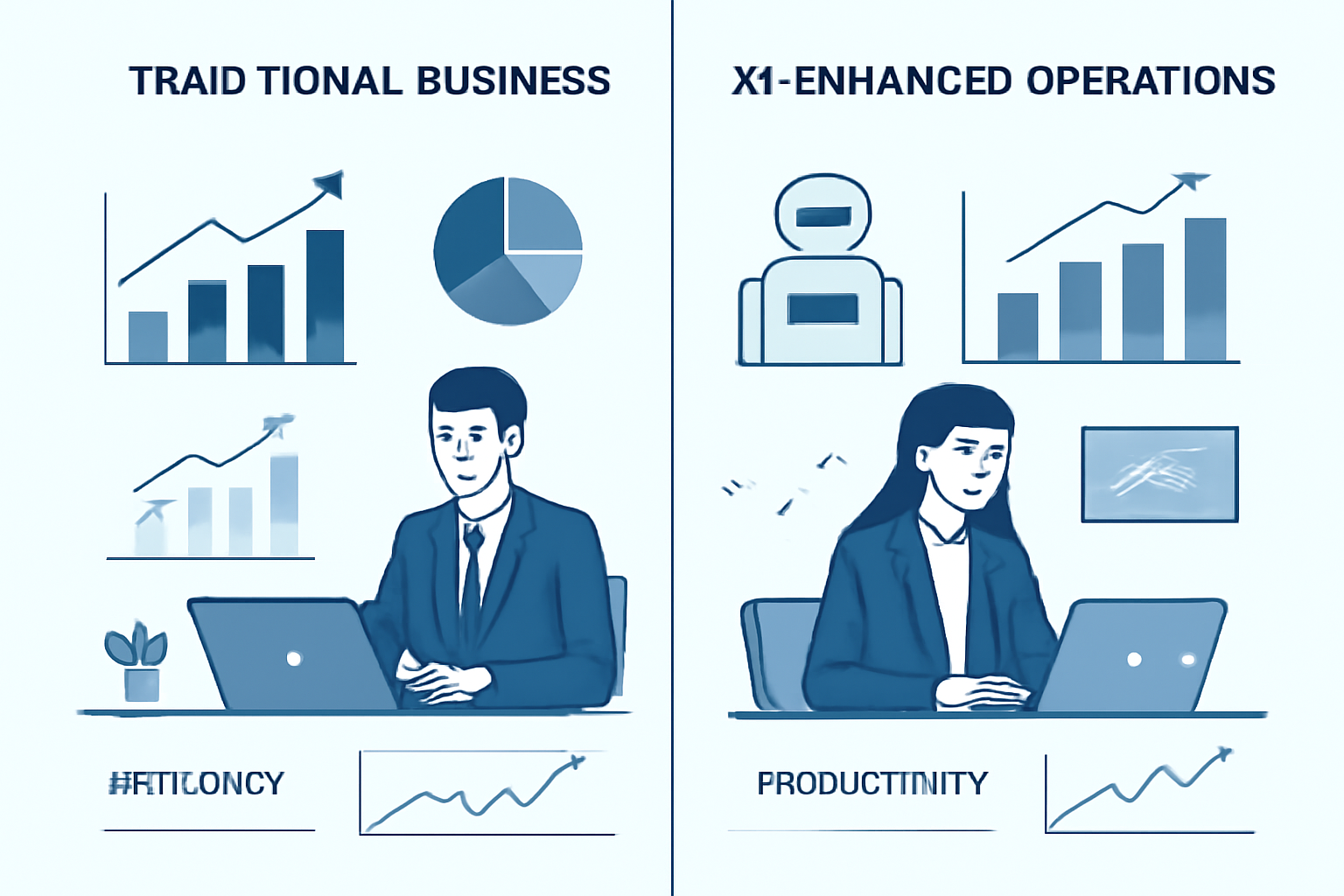
Measuring return on investment for AI solutions requires tracking both hard and soft benefits against total cost of ownership. Direct costs include software licensing or development, infrastructure and computing resources, implementation services, training, and ongoing maintenance. Indirect costs encompass change management, productivity losses during transition, and opportunity costs of delayed deployment.
Revenue impact metrics include increased sales from AI-powered recommendations, improved conversion rates from predictive analytics, expanded market reach through automated personalization, and new revenue streams enabled by AI capabilities. Cost savings manifest through labor reduction from automation, decreased error rates, lower customer acquisition costs, reduced fraud losses, and optimized resource utilization.
The ROI calculation formula combines these elements: (Total Benefits – Total Costs) / Total Costs × 100. A customer service chatbot costing $50,000 annually that reduces support staff needs by $150,000 while improving satisfaction delivers 200% ROI. However, comprehensive ROI analysis extends beyond year one, projecting 3-5 year returns as AI systems improve through learning and expanded applications.
Establishing Success Metrics and KPIs
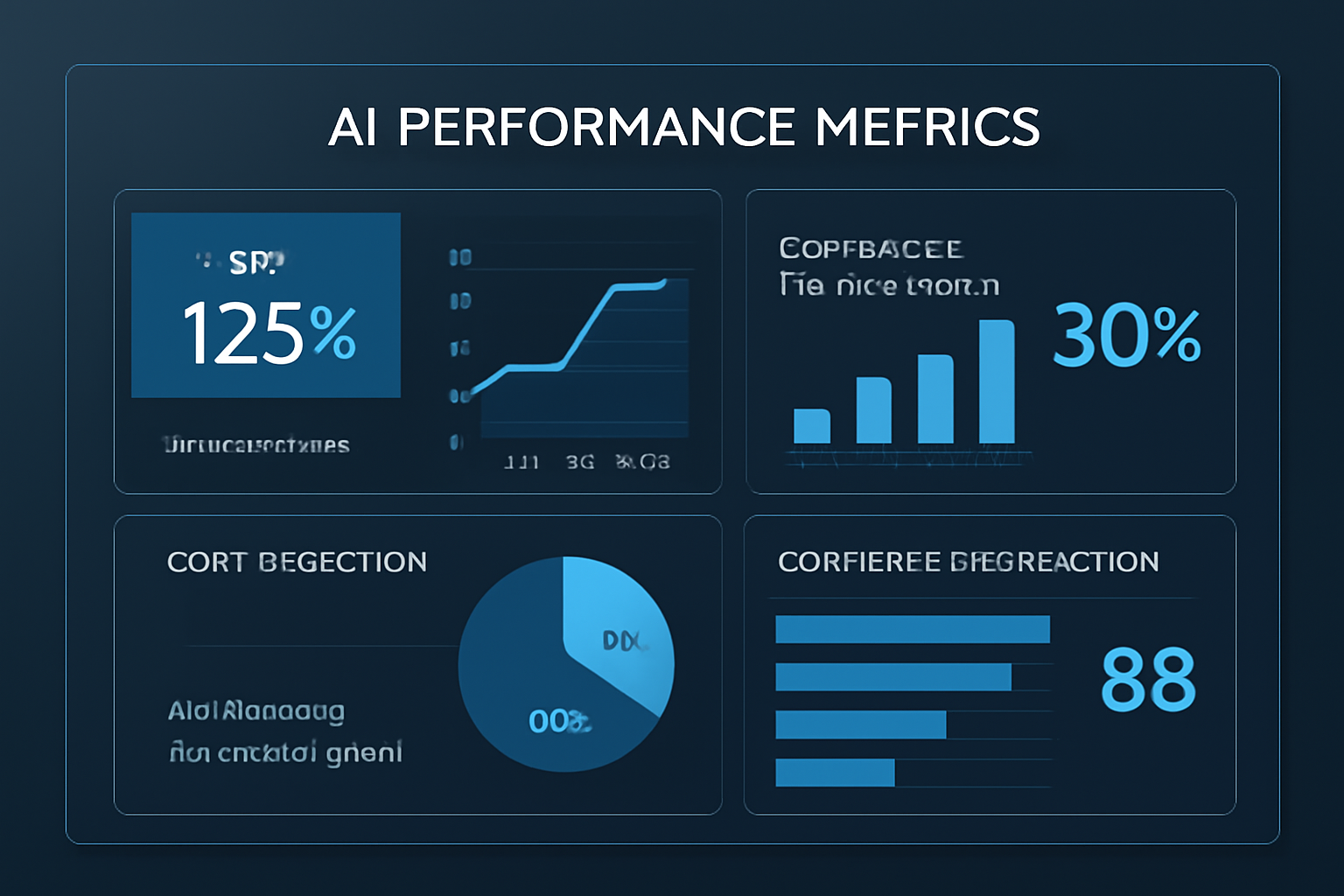
Effective AI implementations define clear key performance indicators before deployment. Customer service AI tracks metrics like resolution rate, average handling time, customer satisfaction scores, and cost per interaction. Sales AI monitors conversion rates, deal velocity, forecast accuracy, and revenue per representative. Operations AI measures throughput, error rates, resource utilization, and cycle times.
Leading organizations establish baseline measurements before AI deployment, then track improvements monthly. This data-driven approach demonstrates value to stakeholders, identifies optimization opportunities, and justifies expanded AI investments. Benchmark comparisons against industry standards provide additional context for evaluating performance.

Building Your AI Implementation Roadmap
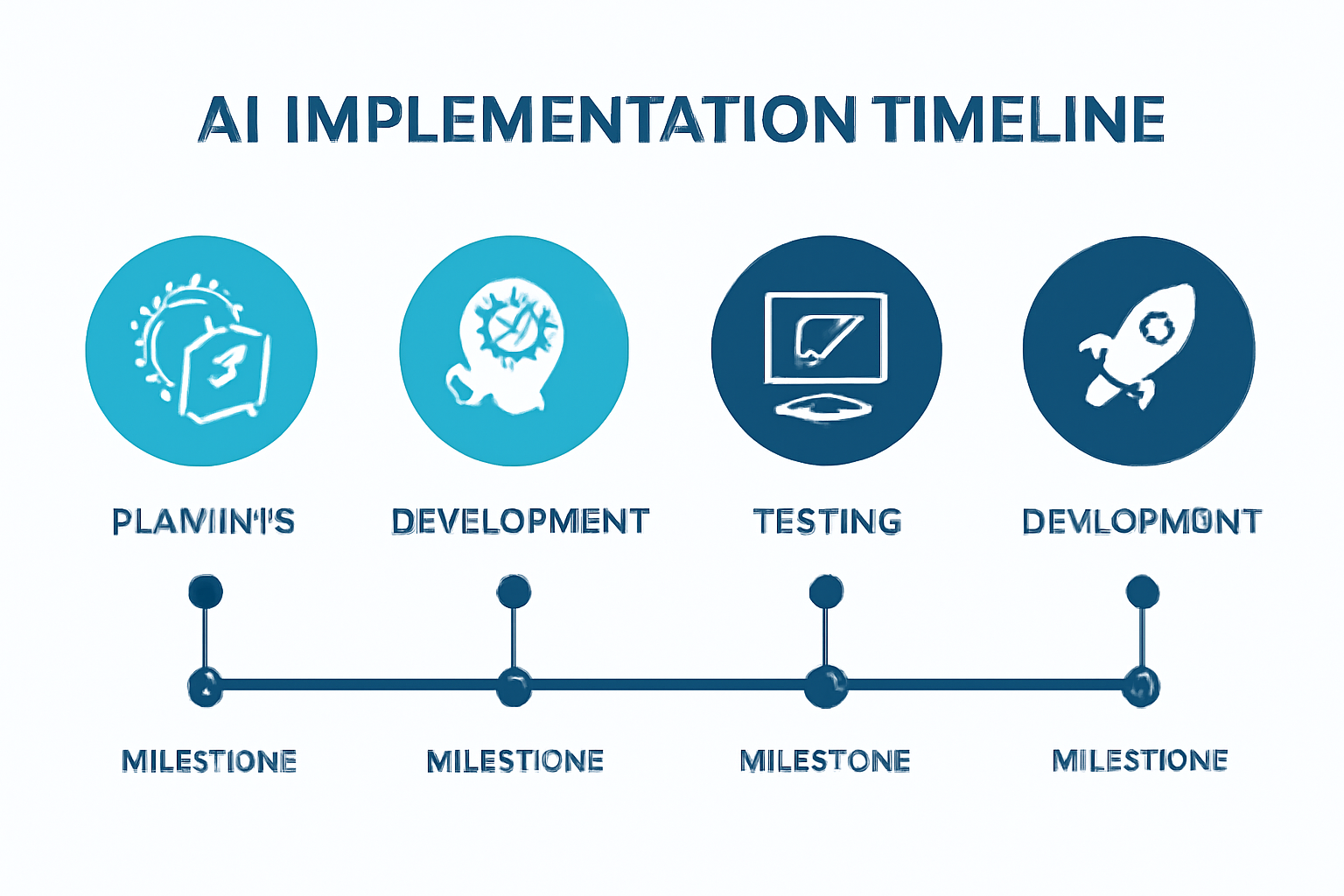
Successful AI implementation follows a structured approach beginning with strategic planning. Organizations first identify high-impact use cases by analyzing pain points, inefficiencies, and growth opportunities. The ideal initial AI project delivers measurable value within 3-6 months, requires limited integration complexity, and addresses a clear business need with available data.
The discovery phase assesses data readiness, technical infrastructure, team capabilities, and organizational change requirements. Many AI projects fail due to insufficient or poor-quality data, so data audit and preparation often consume 40-60% of implementation timelines. Infrastructure evaluation determines whether existing systems support AI workloads or require upgrades.
Pilot programs minimize risk by testing AI solutions on limited scope before full deployment. A 90-day pilot typically includes 30 days for setup and training, 45 days for testing and refinement, and 15 days for evaluation and planning. Successful pilots demonstrate clear value, identify integration challenges, and build organizational confidence for broader rollout.
Custom Development vs. Off-the-Shelf Solutions
The build-versus-buy decision significantly impacts timeline, cost, and outcomes. Off-the-shelf AI solutions offer faster deployment (weeks vs. months), lower upfront costs, proven functionality, and vendor support. These platforms suit common business functions like customer service, email marketing, and basic analytics where standardized solutions meet most requirements.
Custom AI development makes sense when competitive differentiation requires proprietary capabilities, unique data creates advantages, industry-specific requirements exceed standard solutions, or integration complexity demands tailored approaches. Custom projects cost 3-10 times more than commercial alternatives but deliver precisely matched functionality and intellectual property ownership.
Hybrid approaches combine commercial platforms with custom extensions, balancing cost-effectiveness with specific needs. Many businesses start with off-the-shelf solutions, then customize as requirements evolve and ROI justifies investment.
Selecting AI Vendors and Solutions
Vendor evaluation requires assessing multiple factors beyond features and pricing. Technical considerations include integration capabilities with existing systems, scalability to handle growth, security and compliance certifications, API quality and documentation, and deployment flexibility (cloud, on-premise, or hybrid). Functional requirements vary by use case but should align closely with defined business objectives.
Vendor stability and support quality significantly impact long-term success. Evaluate the company’s financial health, customer retention rates, product roadmap, implementation methodology, training resources, and support responsiveness. Reference calls with current customers reveal real-world experiences with deployment challenges, ongoing support, and actual results achieved.
Pricing models for AI solutions include subscription-based SaaS (typically $500-$50,000+ monthly depending on scale), usage-based pricing tied to transactions or API calls, perpetual licenses with maintenance fees, and custom development contracts. Total cost of ownership calculations should include all licensing, infrastructure, implementation, training, and support expenses over 3-5 years.
Building Your AI Implementation Team
Successful AI implementations require cross-functional teams combining business, technical, and change management expertise. Core roles include an executive sponsor providing strategic direction and resources, a project manager coordinating activities and timelines, business analysts defining requirements and success metrics, and technical leads handling architecture and integration.
Depending on project scope, teams may need data scientists for model development, data engineers for pipeline creation, software developers for custom integration, and change management specialists for user adoption. Small businesses often supplement internal teams with consultants or rely heavily on vendor implementation services.
Skills development through training programs prepares organizations for AI adoption. Technical staff need education on AI platforms and tools, while business users require training on AI-enhanced processes and decision-making. Creating an AI-literate organization accelerates adoption and maximizes value realization.
Integration with Existing Business Systems
AI solutions deliver maximum value when integrated seamlessly with CRM, ERP, marketing automation, and other business systems. Integration approaches range from simple API connections to complex data synchronization and workflow automation. Modern AI platforms offer pre-built connectors for popular business applications, reducing integration time and complexity.
Legacy system compatibility presents challenges requiring careful planning. Organizations with older technology may need middleware layers, data warehouses, or gradual migration strategies. Cloud-based AI solutions often integrate more easily than on-premise alternatives, though security and compliance requirements may dictate deployment approaches.
Data governance frameworks ensure AI systems access accurate, consistent information while maintaining security and privacy. Establishing clear data ownership, quality standards, access controls, and audit trails prevents issues that undermine AI effectiveness and create compliance risks.
Measuring Long-Term AI Success
Beyond initial ROI, sustained AI success requires ongoing optimization and expansion. Performance monitoring identifies model drift where AI accuracy degrades over time, prompting retraining with current data. Regular reviews assess whether AI solutions continue meeting business needs as requirements evolve.
Mature AI programs expand successful initial implementations to additional use cases and departments. Organizations that prove value with customer service chatbots extend AI to sales support, internal help desks, and knowledge management. This iterative approach builds capabilities while managing risk and investment.
The most successful AI adopters embed artificial intelligence into their strategic planning and operational culture. Rather than treating AI as a technology project, they recognize it as a fundamental business capability that continuously evolves. This mindset shift from implementation to optimization distinguishes AI leaders from organizations struggling to realize value from their investments.
Frequently Asked Questions
What is the average ROI timeline for AI solutions in business?
Most businesses see initial ROI from AI solutions within 6-18 months, with full ROI typically achieved in 2-3 years. Quick-win implementations like chatbots can show positive returns in as little as 3-6 months, while complex custom AI systems may require longer timeframes to demonstrate full value.
How much does it cost to implement AI solutions in a small to medium-sized business?
AI implementation costs vary widely from $500-$5,000 monthly for off-the-shelf SaaS solutions to $50,000-$500,000+ for custom enterprise AI development. Small businesses can start with affordable cloud-based AI tools, while larger implementations require budgets for software, infrastructure, talent, and ongoing maintenance.
What are the biggest challenges businesses face when implementing AI?
The primary challenges include data quality and availability, lack of in-house AI expertise, integration with legacy systems, and organizational change management. Many businesses also struggle with setting realistic expectations, identifying appropriate use cases, and measuring success effectively.
Do I need a data scientist to implement AI solutions in my business?
Not necessarily for basic implementations. Many modern AI platforms offer no-code or low-code solutions that business users can deploy without data science expertise. However, complex custom AI projects, advanced analytics, and machine learning model development typically require data scientists or AI specialists.
What business functions benefit most from AI implementation?
Customer service, sales and marketing, data analytics, and operational efficiency see the highest impact from AI. Chatbots reduce support costs by 30-50%, predictive analytics improve forecasting accuracy, AI-powered marketing increases conversion rates, and process automation eliminates repetitive tasks across departments.