The financial services industry is experiencing a profound transformation driven by AI in financial services, fundamentally reshaping how institutions operate, manage risk, and serve customers. From fraud detection systems that analyze millions of transactions per second to conversational AI chatbots providing 24/7 customer support, artificial intelligence has evolved from experimental technology to mission-critical infrastructure. Financial institutions investing in AI capabilities are realizing measurable improvements in operational efficiency, risk mitigation, regulatory compliance, and customer satisfaction—creating competitive advantages that define market leadership in an increasingly digital economy.
This comprehensive guide explores the full spectrum of AI applications transforming financial services today. Whether you’re a financial executive evaluating AI investment priorities, a technology leader implementing machine learning solutions, or a professional seeking to understand how artificial intelligence is revolutionizing banking, insurance, and wealth management, this resource provides actionable insights into the technologies, strategies, and real-world implementations driving the industry forward.
The Current State of AI in Financial Services: Market Overview and Adoption Trends
The global AI in fintech market has experienced explosive growth, with financial institutions allocating substantial portions of their technology budgets to artificial intelligence and machine learning initiatives. According to recent industry research, the financial services sector ranks among the top three industries in AI adoption, with implementation rates accelerating year-over-year across all major categories including retail banking, investment management, insurance, and payment processing.
Major financial institutions have moved beyond pilot programs to enterprise-scale AI deployments. Leading banks now operate hundreds of machine learning models in production environments, processing billions of data points daily to support decision-making across lending, trading, customer service, and risk management functions. This widespread adoption reflects both the maturation of AI technologies and the compelling return on investment that early adopters have demonstrated.
The driving forces behind AI adoption in financial services include increasing regulatory complexity, rising customer expectations for digital experiences, intensifying competitive pressure from fintech startups, and the exponential growth of data requiring automated analysis. Traditional manual processes simply cannot scale to meet these challenges, making AI-powered automation not merely advantageous but essential for institutional survival and growth.

AI-Powered Fraud Detection and Transaction Security
Financial fraud represents one of the most significant threats facing the industry, with annual losses measured in hundreds of billions of dollars globally. Traditional rule-based fraud detection systems struggle with high false-positive rates and inability to identify novel attack patterns, creating both security vulnerabilities and customer friction. Machine learning has revolutionized fraud prevention by enabling real-time analysis of transaction patterns, behavioral anomalies, and contextual risk factors with unprecedented accuracy.
Modern AI fraud detection systems employ multiple machine learning techniques simultaneously. Supervised learning models trained on historical fraud data identify known attack patterns, while unsupervised anomaly detection algorithms flag suspicious activities that deviate from established behavioral baselines. Deep learning neural networks analyze complex feature interactions that human analysts and traditional systems would miss, detecting sophisticated fraud schemes involving multiple coordinated transactions across different channels and time periods.
The real-time processing capabilities of AI fraud detection systems deliver immediate value. Transactions are evaluated within milliseconds, allowing legitimate purchases to proceed seamlessly while suspicious activities trigger additional verification steps or automatic blocks. This speed is critical in payment card fraud prevention, where seconds matter in stopping unauthorized transactions before they complete. Financial institutions implementing advanced AI fraud detection report fraud loss reductions of 50-70% while simultaneously decreasing false positives that inconvenience legitimate customers.
Anti-Money Laundering and Regulatory Compliance Automation
Anti-money laundering (AML) compliance represents another critical application where AI delivers transformative impact. Financial institutions must monitor billions of transactions to identify potential money laundering activities, a task that overwhelms manual review processes and generates enormous volumes of false alerts. AI-powered AML systems apply natural language processing to analyze transaction descriptions, network analysis to identify suspicious relationship patterns, and machine learning to prioritize alerts based on genuine risk probability.
These intelligent systems reduce the alert volume requiring human investigation by 60-80%, allowing compliance teams to focus expertise on genuinely suspicious activities rather than wading through false positives. Regulatory technology (RegTech) solutions powered by AI also automate compliance reporting, regulatory change monitoring, and audit trail documentation, reducing compliance costs while improving accuracy and consistency.

Robotic Process Automation: Transforming Banking Operations
Back-office operations in financial services have historically relied on labor-intensive manual processes for account opening, loan processing, reconciliation, and reporting tasks. Robotic Process Automation (RPA) combined with artificial intelligence creates “digital workers” that execute repetitive tasks with perfect accuracy, 24/7 availability, and processing speeds that far exceed human capabilities. This operational transformation reduces costs, eliminates errors, and frees human employees to focus on higher-value activities requiring judgment and relationship skills.
Intelligent automation in banking extends beyond simple task automation to include cognitive capabilities. AI-enhanced RPA systems can read and interpret documents, extract relevant data from unstructured sources, make rule-based decisions, and even learn from exceptions to improve performance over time. For example, mortgage processing automation can extract information from income statements, tax returns, and bank statements in various formats, verify data consistency, calculate debt-to-income ratios, and route applications through appropriate approval workflows—completing in hours what previously required days of manual work.
The financial impact of RPA implementation is substantial. Leading banks report operational cost reductions of 40-70% in automated processes, with processing times decreasing by similar magnitudes. Beyond direct cost savings, automation improves customer experience through faster service delivery, reduces compliance risk through consistent process execution, and enhances scalability by enabling institutions to handle volume increases without proportional staffing growth.
Conversational AI and Customer Experience Enhancement
Customer expectations for financial services have been shaped by experiences with leading digital companies—expectations for instant responses, 24/7 availability, personalized interactions, and seamless omnichannel experiences. Conversational AI chatbots and virtual assistants enable financial institutions to meet these expectations at scale, handling millions of customer interactions simultaneously while maintaining quality and personalization that would be impossible with human-only service models.
Modern financial service chatbots leverage natural language processing to understand customer intent across varied phrasing, context from conversation history and customer data to provide relevant responses, and integration with core banking systems to execute transactions and retrieve account information. Advanced implementations incorporate sentiment analysis to detect customer frustration and escalate to human agents appropriately, voice biometrics for authentication, and multi-language support for global customer bases.
The business case for conversational AI is compelling. Chatbots handle 60-80% of routine inquiries without human intervention, reducing contact center costs while improving response times from minutes to seconds. Customer satisfaction metrics often exceed those of traditional channels for simple transactions, as users appreciate the immediate availability and efficiency. Financial institutions also gain valuable data on customer needs, pain points, and behavior patterns from chatbot interactions, informing product development and service improvements.

AI-Driven Personalization in Digital Banking
Generic, one-size-fits-all financial products and marketing messages no longer resonate with digitally savvy customers who expect personalized experiences tailored to their specific circumstances, goals, and preferences. AI-powered personalization engines analyze customer data—transaction history, life events, browsing behavior, demographic information, and external data sources—to create individualized product recommendations, targeted content, and customized user experiences that drive engagement and revenue.
Recommendation systems in banking apply collaborative filtering algorithms similar to those used by e-commerce and streaming platforms, identifying patterns in how customers with similar profiles use financial products. Machine learning models predict life events likely to trigger financial product needs—home purchases, business formation, retirement planning—enabling proactive outreach with relevant offerings at optimal moments. Dynamic pricing algorithms customize interest rates and fee structures based on individual risk profiles and relationship value, optimizing both customer value and institutional profitability.
The revenue impact of AI-driven personalization is significant, with financial institutions reporting 20-40% increases in digital product adoption rates and 30-50% improvements in marketing campaign conversion rates. Personalization also enhances customer retention by demonstrating that the institution understands and anticipates customer needs, strengthening relationship value beyond simple transaction processing.
Predictive Analytics for Customer Churn Prevention
Customer acquisition costs in financial services far exceed retention costs, making churn prevention a critical priority. AI-powered predictive analytics identify customers at risk of attrition by analyzing behavioral signals—declining transaction frequency, reduced balance levels, increased competitor research, service complaint patterns—that precede account closure. These early warning systems enable proactive retention interventions before customers make final decisions to leave.
Machine learning churn prediction models achieve accuracy rates of 80-90% in identifying at-risk customers, with sufficient lead time for effective intervention. Financial institutions use these predictions to trigger personalized retention offers, specialized service outreach, product recommendations addressing unmet needs, or fee adjustments that improve customer value perception. Successful churn prevention programs reduce attrition rates by 15-30%, delivering substantial lifetime value preservation.
Algorithmic Trading and AI Portfolio Management
Investment management has been transformed by artificial intelligence, with algorithmic trading systems now accounting for the majority of trading volume in major markets. AI-powered trading algorithms analyze vast datasets—market prices, economic indicators, news sentiment, social media trends, satellite imagery, credit card transaction data—to identify profitable trading opportunities and execute orders at optimal prices and timing. These systems operate at speeds measured in microseconds, capitalizing on market inefficiencies that exist for fractions of a second.
Beyond high-frequency trading, AI is revolutionizing portfolio management through robo-advisors that provide automated investment advice and portfolio management at fraction of traditional advisory costs. Machine learning models optimize asset allocation based on individual risk tolerance, investment goals, and market conditions, automatically rebalancing portfolios and tax-loss harvesting to maximize after-tax returns. These platforms have democratized access to sophisticated investment management previously available only to high-net-worth individuals.
AI portfolio management systems also enhance risk management through continuous monitoring of portfolio exposures, stress testing under various market scenarios, and automatic hedging when risk thresholds are exceeded. Sentiment analysis of news and social media provides early warning of potential market-moving events, while alternative data sources offer unique insights unavailable through traditional fundamental analysis.
Credit Risk Assessment and Lending Automation
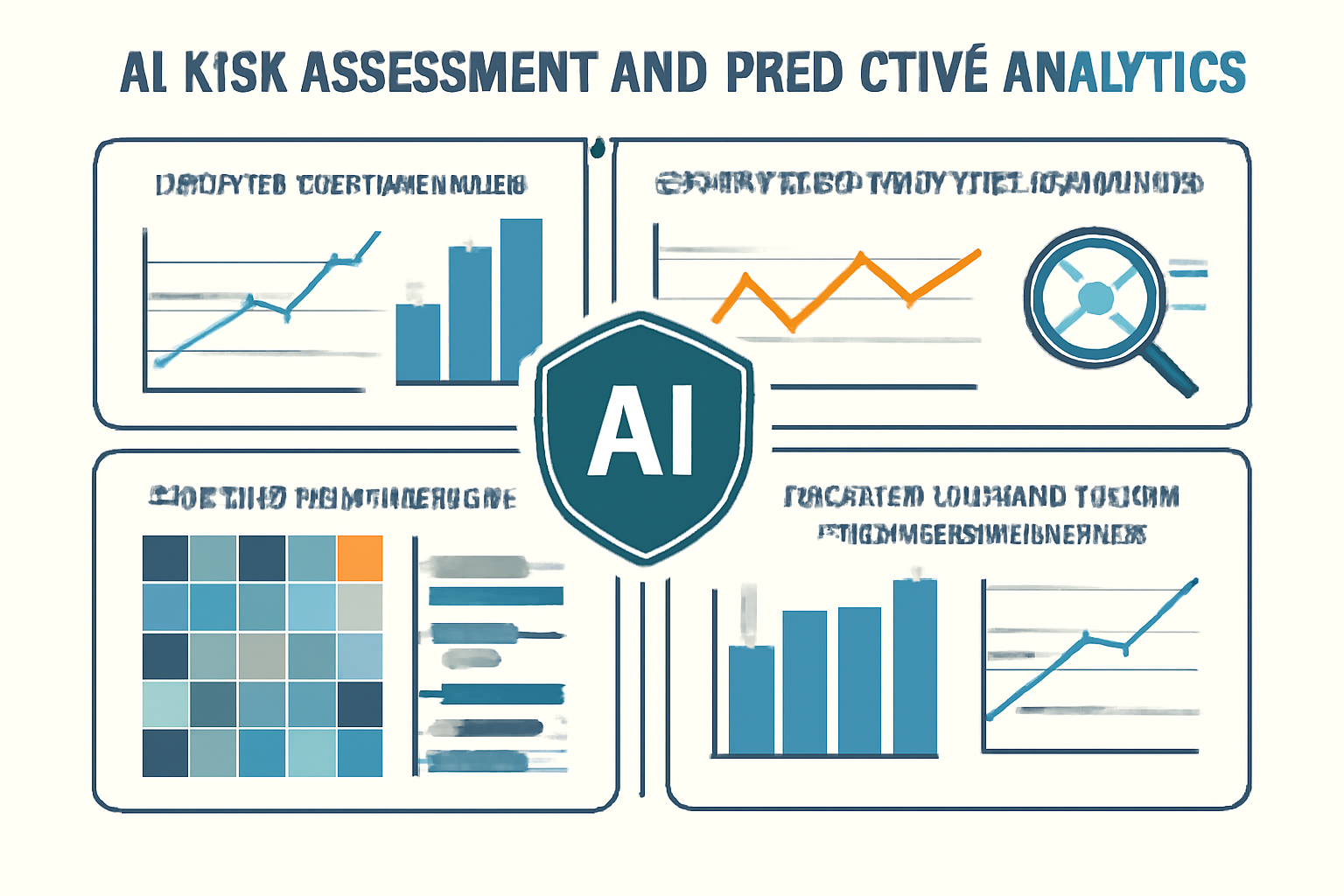
Credit underwriting represents one of the most impactful applications of machine learning in finance, directly affecting both institutional profitability and financial inclusion. Traditional credit scoring models rely on limited data sources and linear relationships that fail to capture the complexity of creditworthiness. AI-powered credit risk models incorporate hundreds or thousands of variables—alternative data sources like utility payments, rental history, education, employment stability, and behavioral patterns—analyzed through sophisticated algorithms that identify non-linear relationships and interaction effects.
Machine learning credit models consistently outperform traditional approaches, reducing default rates by 15-25% at given approval rates or expanding access to credit by approving more applicants at equivalent risk levels. This improved accuracy benefits both lenders through reduced losses and borrowers through expanded access and more accurate risk-based pricing. Explainable AI techniques address regulatory requirements for transparent decision-making, providing clear rationales for credit decisions that satisfy fair lending compliance obligations.
Automated lending platforms integrate AI credit assessment with robotic process automation for end-to-end loan processing. Applications are evaluated in minutes rather than days, with instant decisions for straightforward cases and intelligent routing to human underwriters for complex situations. This speed improves customer experience, reduces operational costs, and enables financial institutions to compete effectively with fintech lenders who have made instant approval a market expectation.
Natural Language Processing for Document Analysis and Compliance
Financial institutions process enormous volumes of unstructured text data—contracts, loan applications, regulatory filings, research reports, customer communications—that contain critical information requiring analysis and action. Natural language processing enables automated extraction, classification, and analysis of this text data at scale, transforming documents from static information repositories into actionable intelligence.
Contract analysis represents a particularly valuable application, where NLP systems extract key terms, identify non-standard clauses, flag compliance risks, and compare provisions against templates and regulatory requirements. Legal and compliance teams that previously spent days reviewing complex agreements now receive automated summaries highlighting critical issues requiring attention, reducing review time by 60-80% while improving consistency and accuracy.
Regulatory compliance monitoring applies NLP to track regulatory changes across jurisdictions, assess impact on institutional policies and procedures, and identify required updates to compliance programs. Sentiment analysis of customer communications identifies dissatisfaction patterns and potential complaint escalations, enabling proactive service recovery. Financial research automation uses NLP to extract insights from earnings calls, analyst reports, and news coverage, supporting investment decision-making with comprehensive information synthesis.
Computer Vision in Insurance and Financial Services
Computer vision technology enables machines to interpret and analyze visual information, creating powerful applications in insurance claims processing, identity verification, and document processing. Insurance companies deploy AI-powered image analysis to assess vehicle damage, property damage, and medical imaging, accelerating claims processing from weeks to hours while improving accuracy and reducing fraud.
Automated damage assessment systems analyze photos submitted by policyholders, identifying damage severity, estimating repair costs, and approving straightforward claims without human adjuster involvement. These systems achieve accuracy comparable to experienced adjusters for standard claims while processing thousands of claims simultaneously. Computer vision fraud detection identifies inconsistencies between claimed damage and photographic evidence, staged accidents, and duplicate claims using the same damage images.
Identity verification and know-your-customer (KYC) processes leverage computer vision to validate identity documents, detect forgeries, and perform facial recognition matching photos to live video. This technology enables remote account opening and loan applications while maintaining security and regulatory compliance, supporting digital transformation initiatives that reduce branch dependency.
Implementation Strategies and Best Practices for AI in Financial Services
Successful AI implementation in financial services requires strategic planning that addresses technology selection, data infrastructure, talent acquisition, change management, and regulatory compliance. Leading institutions approach AI as an enterprise capability rather than isolated projects, building centralized data platforms, establishing AI centers of excellence, and developing governance frameworks that ensure responsible and effective AI use.
Data quality and accessibility represent foundational requirements for AI success. Machine learning models are only as good as the data they’re trained on, making data governance, integration, and quality management critical priorities. Financial institutions must break down data silos, establish unified customer data platforms, and implement data quality processes that ensure accuracy, completeness, and consistency.
Talent strategy must address the competitive market for AI expertise through combinations of hiring, partnerships with technology vendors, and upskilling existing staff. Building internal AI literacy across business units enables effective collaboration between technical teams and domain experts who understand business context and regulatory requirements. This collaboration is essential for developing AI solutions that deliver genuine business value rather than technically impressive but commercially irrelevant demonstrations.
Ethical AI and Regulatory Considerations
Financial services face heightened regulatory scrutiny regarding AI use, particularly for applications affecting consumer credit, insurance underwriting, and investment advice. Institutions must ensure AI systems comply with fair lending laws, data privacy regulations, and consumer protection requirements while maintaining explainability and auditability of automated decisions.
Responsible AI frameworks address bias detection and mitigation, ensuring models don’t perpetuate or amplify discriminatory patterns in training data. Model governance processes establish validation requirements, performance monitoring, and periodic review to ensure continued accuracy and fairness. Transparency mechanisms provide customers with explanations of AI-driven decisions, building trust and satisfying regulatory expectations.
The Future of AI in Financial Services: Emerging Trends and Opportunities
The evolution of AI in financial services continues to accelerate, with emerging technologies and applications promising even greater transformation. Generative AI models are beginning to create personalized financial content, generate synthetic data for model training, and assist human analysts with research and report generation. Federated learning enables collaborative AI model development across institutions while preserving data privacy, potentially improving fraud detection and risk assessment through shared intelligence.
Quantum computing, while still nascent, promises to revolutionize portfolio optimization, risk simulation, and cryptography with computational power far exceeding classical computers. Edge AI brings machine learning inference to mobile devices and IoT sensors, enabling real-time decision-making without cloud connectivity dependencies. These technological advances will unlock applications not yet imagined, continuing the transformation of financial services into an increasingly intelligent, automated, and customer-centric industry.
Financial institutions that embrace AI strategically—investing in data infrastructure, developing talent, establishing governance frameworks, and maintaining focus on genuine business value—will define competitive advantage in the next decade of financial services evolution. The question is no longer whether to adopt AI in financial services, but how quickly and effectively institutions can implement these transformative technologies to serve customers better, manage risk more effectively, and operate more efficiently in an increasingly digital economy.